
Playlist

Turkmenistan Higher Education Sector Introduces 20 New Academic Specializations for the Upcoming Cycle
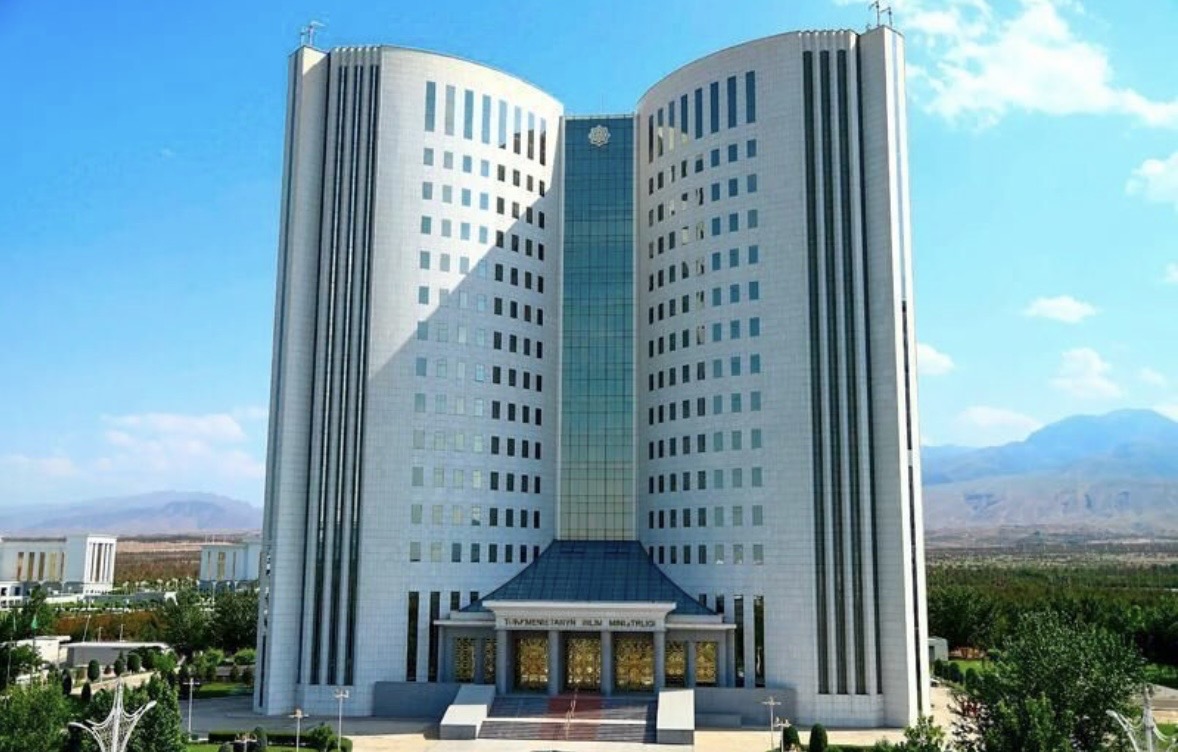
13 Jul. 12:33In absolute compliance with the long-term human capital development strategy and shifting national economic demands, the ministry of education has verified the inclusion of 20 new academic specializations across higher and medium vocational institutions. The contemporary disciplines—focusing on automated digital networks, heavy engineering, agricultural sciences, international diplomacy, and advanced pedagogy—will operate under standardized specialist, bachelor, and master degree program blueprints.
The institutional frameworks for oil, gas, and energy universities will incorporate automated asset management, metrology, software engineering, and data security matrices tailored specifically for the energy sector. Concurrently, the agricultural academic sector has integrated IT-driven water resource management systems alongside crop genetics and biotechnology. These structural upgrades are designed to supply state production plants with technically proficient scientific personnel capable of optimizing natural resource distribution.
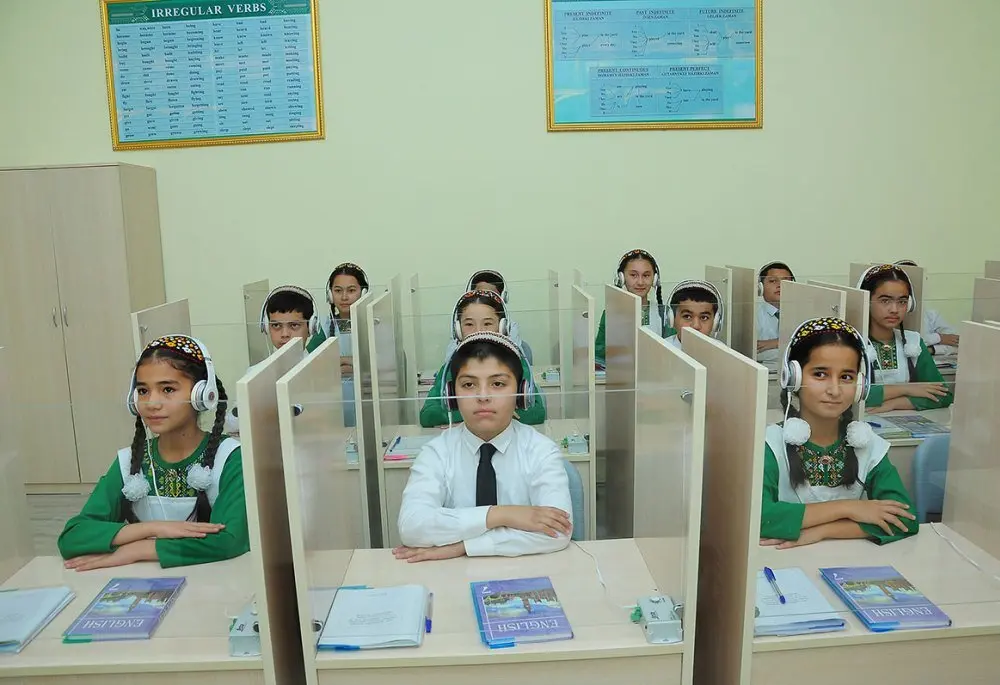
The pedagogical and humanitarian universities have expanded their curriculum structures to feature critical foreign languages, specialized defectology programs, cognitive psychology, and environmental monitoring. Technical and entrepreneurial campuses will launch dedicated bachelor divisions focused on artificial intelligence, mechatronics, robotics, and cyber defense for automated networks. Furthermore, the premier diplomatic institute will activate a master-level tract centered on the geopolitical frameworks of international peace and permanent neutrality.
The vocational training matrix has also adjusted its infrastructure, introducing technical courses in industrial equipment maintenance and AI-driven data analytics. Moving into the upcoming academic session, the coordinated state curriculum will actively transition toward training professional demographics for high-priority career models listed within the national directory of future specializations.
Also read


Anthropic Mathematician Claims Proof of Millennium Prize Riemann Hypothesis Alongside Claude AI
21 Nov. 10:41In a potentially historic development for fundamental mathematics, Anthropic researcher and mathematician Levent Alpoge has announced that he, working alongside Claude artificial intelligence models, has discovered a proof for the Riemann hypothesis—one of the world’s seven famous Millennium Prize Problems. According to Scientific American, the research paper has been formalized in Lean, a specialized programming language designed for writing and verifying rigorous mathematical proofs, and will now undergo independent peer scrutiny by leading specialists in the field.
Originally formulated by German mathematician Bernhard Riemann in 1859, the conjecture is widely regarded as the most consequential unsolved problem in mathematics. Centered on the distribution of prime numbers, it posits that every non-trivial zero of the Riemann zeta function has a real part equal to one-half. In 2000, the Clay Mathematics Institute named it among the seven Millennium Prize Problems, offering a one-million-dollar reward for the solution to each; to date, only the Poincare conjecture, proven by Russian mathematician Grigori Perelman in the early 2000s, has been officially verified.
Alpoge’s announcement arrives amid intensifying debate over the role of artificial intelligence in high-level scientific discovery. Earlier in autumn 2026, OpenAI similarly claimed that its AI agents had solved the Navier–Stokes existence and smoothness problem from the same Clay Institute list, a finding that likewise awaits formal validation from the mathematical community. Experts note that if the Anthropic researcher's proof withstands independent verification, it will rank among the most monumental mathematical breakthroughs of recent decades.
Blitz