
Playlist

Turkmenistan and UNICEF Outline Key Priorities for Sustainable Child Welfare Initiatives
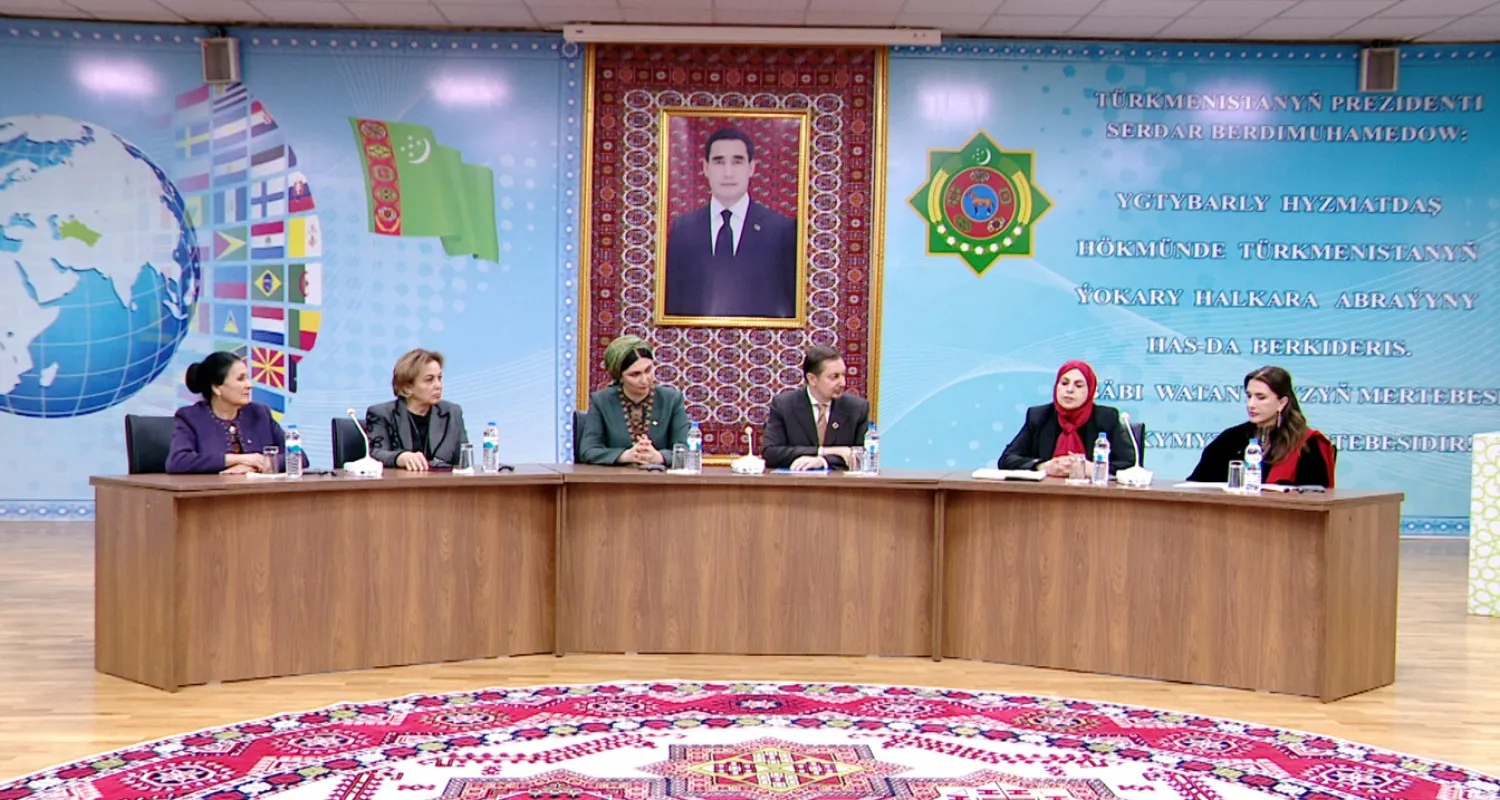
04 Jun. 16:23Deputy Minister of Foreign Affairs of Turkmenistan Myahri Bashimova conducted a working session with Jalpa Ratna, the Representative of the United Nations Children's Fund (UNICEF) in Turkmenistan. During the institutional dialogue, both officials commended the highly productive nature of the multi-decade strategic partnership between the nation and the UN agency. The meeting focused extensively on refining coordination models to optimize child healthcare, early childhood education, and minor protection rights across the state.
A significant portion of the conversation was dedicated to evaluating the impact of recent social campaigns organized to mark International Children's Day. These localized celebrations were managed in direct coordination with the Gurbanguly Berdimuhamedov Children’s Charitable Fund. According to foreign office media releases, the shared institutional frameworks utilized during these public programs successfully demonstrated how international humanitarian agencies can seamlessly integrate with sovereign welfare systems.
The administrative delegates reviewed a comprehensive index of ongoing socioeconomic assignments designed to upgrade inclusive learning systems and pedagogical methodologies within local municipalities. The UNICEF representative highlighted Turkmenistan’s proactive approach toward incorporating international child development metrics into domestic structural programs. Looking forward, the discussion shifted to establishing new technological paradigms and digital literacy toolkits aimed at supporting remote youth communities.
Concluding the diplomatic session, the officials finalized administrative and logistics schedules for upcoming high-level human rights conventions and cross-agency workshops. The productive meeting reinforced a mutual commitment to intensifying cooperative activities, ensuring that all upcoming international summits and programmatic deployments operate in strict alignment with regional sustainable development goals.
Also read


Ecological Shift: Golden Jackals Pro Projected to Inhabit 75% of the European Continent
Today in 06:53Once restricted mainly to the Balkans and the Black Sea coastal regions, golden jackals are rapidly expanding their footprint across Europe. According to a landmark study by an international research team published in Nature Ecology & Evolution, these adaptable predators could eventually inhabit up to 75% of the European continent—nearly a sixfold expansion from their historical range. Scientists arrived at these conclusions after monitoring nearly 9,000 sampling sites across multiple European nations.
Recent sightings and acoustic tracking confirm that jackals have established populations in the Czech Republic, the Baltic region, and even Scandinavia. The species thrives in areas with mild winters, mixed agricultural landscapes, and proximity to water sources. Regional climate warming has transformed previously uninhabitable northern areas into suitable habitats, while farming landscapes offer abundant food sources and coverage.
Biologists attribute this unprecedented expansion primarily to the historical decline of wolf populations, which naturally suppress jackal numbers and limit their movement. Smaller than wolves but slightly larger than foxes, jackals feed on small rodents, carrion, plants, and fruits. Their high ecological adaptability allows them to settle efficiently into newly colonized territories without human interference.
However, their entry into Western and Southern Europe, including countries like France and Spain, poses potential ecological consequences. Environmentalists warn that the arrival of jackals could disrupt local ecosystems and threaten endangered ground-nesting steppe birds and smaller wildlife across the Iberian Peninsula.
Blitz