
Playlist

Turkmenistan and UAE Diplomats Review Strategic Cooperation and Global Initiatives
14 May. 07:14On May 13, Deputy Foreign Minister of Turkmenistan Mahri Bashimova met with the Ambassador Extraordinary and Plenipotentiary of the United Arab Emirates, Ahmed Al-Hai Hamad Khamis Al-Hameli. The meeting focused on evaluating the current state of bilateral relations and identifying prospective areas for further engagement. The officials noted that the partnership between Ashgabat and Abu Dhabi continues to demonstrate positive dynamics across various strategic sectors.
A significant portion of the dialogue was dedicated to cooperation within international organizations and multilateral frameworks. The parties discussed coordinating their positions on global platforms to address contemporary challenges. This interaction highlights the shared commitment of both nations to promoting peace, security, and sustainable development. The diplomats reaffirmed their intent to support each other's initiatives in the international arena.
The discussion also touched upon critical issues regarding environmental security and education. Both sides emphasized the importance of expanding cooperation in ecological preservation and implementing joint projects aimed at sustainable resource management. By integrating scientific and educational expertise, the two nations aim to foster innovative solutions for environmental challenges, aligning with their long-term national development strategies.
Concluding the session, the diplomats reviewed the schedule of joint activities and high-level events planned for the remainder of 2026. They emphasized the need for continued institutional dialogue to facilitate trade, cultural exchange, and technological partnership. The meeting concluded with a mutual pledge to maintain the high momentum of bilateral ties, ensuring that the cooperation remains effective and mutually beneficial for the people of both nations.
Also read
Solar Mini-Grids to Power Remote Communities Across Turkmenistan Under New Four-Million-Dollar UNDP Initiative
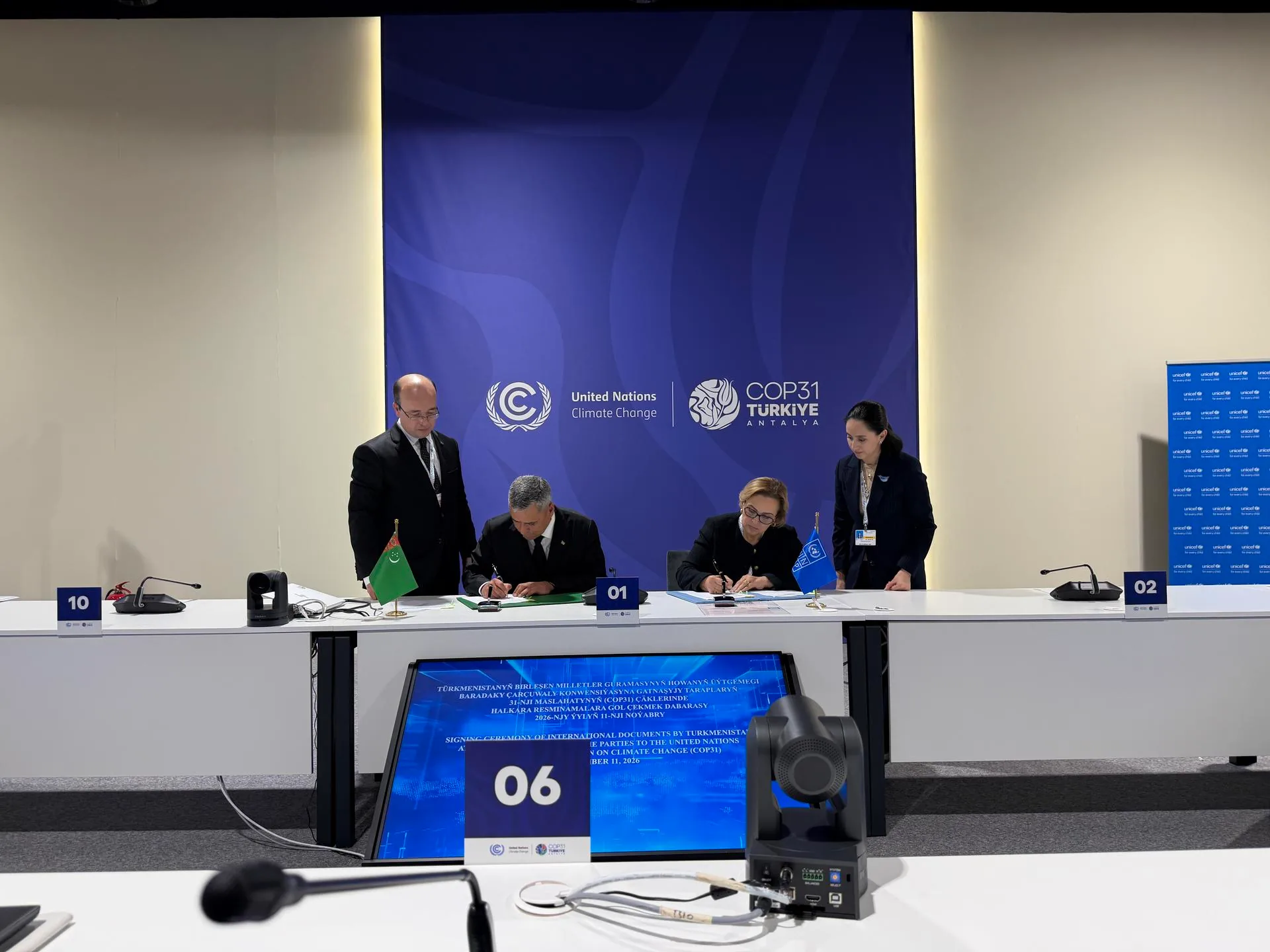
13 Nov. 14:30Following the landmark climate agreements signed on the sidelines of the COP31 conference in Antalya, the United Nations Development Programme (UNDP) has unveiled comprehensive details regarding its upcoming clean energy partnership with the Government of Turkmenistan. Backed by a Global Environment Facility (GEF) grant exceeding 4.17 million US dollars, the five-year project titled "Supporting Energy Transition for Remote Settlements of Turkmenistan" will be executed by the United Nations Office for Project Services (UNOPS) in close coordination with Turkmenistan's Ministry of Environmental Protection and Ministry of Energy.
A central pillar of the initiative involves installing and commissioning up to ten pilot solar mini-power plants with a combined capacity of up to 2 MW in isolated communities that currently rely heavily on diesel generators for electricity. These demonstration facilities will showcase the viability of solar power across Turkmenistan's remote regions and establish a blueprint for broader clean energy adoption. Building upon the operational experience gained from these initial sites, experts will conduct feasibility assessments and prepare tailored technical solutions for potentially deploying solar energy systems in an additional 120 remote settlements.
Beyond physical infrastructure, the project focuses on strengthening the regulatory and institutional framework for renewable energy, training local specialists, and expanding domestic technical expertise. UNDP Resident Representative in Turkmenistan Narine Sahakyan noted that expanding access to reliable, clean electricity significantly enhances community resilience and human well-being—particularly for women and vulnerable groups—by translating national ambitions into tangible investments. The program directly supports Turkmenistan's National Strategy for the Development of Renewable Energy through 2030, advancing the country's commitments under the Paris Agreement and the United Nations Sustainable Development Goals.
Blitz