
Playlist
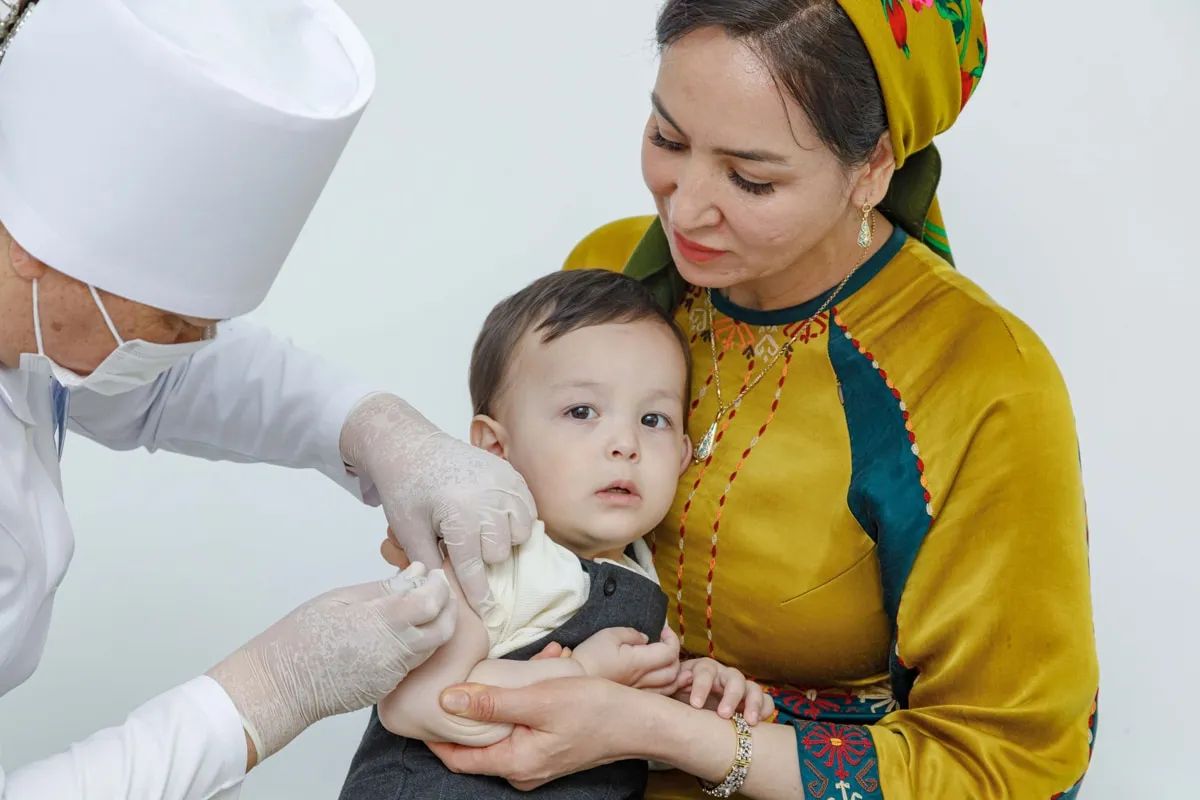
The Ministry of Health and Medical Industry of Turkmenistan has approved a revised National Immunization Schedule, according to Order No. 330 signed on July 21, 2025. The new regulation updates the vaccination timeline and clarifies the groups subject to mandatory immunization.
Under the new rules, children who miss scheduled vaccinations will not be allowed to attend educational institutions, including preschools and general schools, unless they have medical exemptions confirmed by a medical board.
The revised schedule outlines vaccines for various age groups — from birth to 25 years — including those against hepatitis B, tuberculosis, diphtheria, whooping cough, polio, rotavirus, measles, rubella, HPV, and more.
In addition, the regulation places responsibility on institutions and company managers to assist healthcare professionals in carrying out vaccination programs.
A more structured reporting system is also introduced, where vaccination data will be collected and consolidated in stages — from local family health sites to regional hospitals and finally at the national level by the Ministry of Health.
The updated procedure aligns with Turkmenistan’s Sanitary Code, the Law on Infectious Disease Prevention, and the national “Saglyk” health program, aiming to boost the effectiveness of preventive measures and safeguard public health.

Grand Musical Gala in Ashgabat: International Pop Stars Perform at Capital Stadium
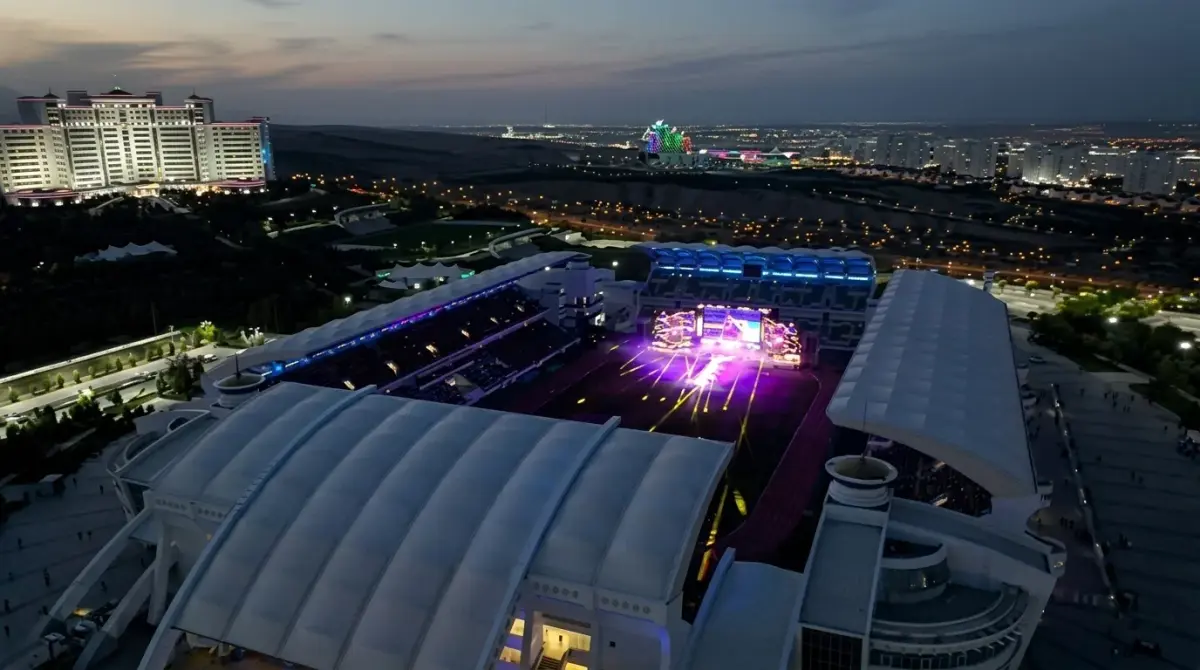
10 Oct. 06:14A festive concert featuring prominent international and domestic artists was hosted at the "Ashgabat" Multi-Purpose Stadium. The line-up included Russian Pop Star and Honored Artist of Turkmenistan Nyusha, Lebanese singer Maya Diab, Turkish pop icons Murat Boz and Hadise, along with Arsen Shakhunts. Nyusha surprised the audience by concluding her performance with the song "Bagt Nury," composed by National Leader of the Turkmen People Gurbanguly Berdimuhamedov.
Dedicated to the 35th Anniversary of Turkmenistan’s Independence, the event brought together thousands of music enthusiasts. Following their stage performances, the international guest artists expressed deep admiration for Ashgabat's urban aesthetic and the warm hospitality extended by the Turkmen public.
Blitz