
Playlist
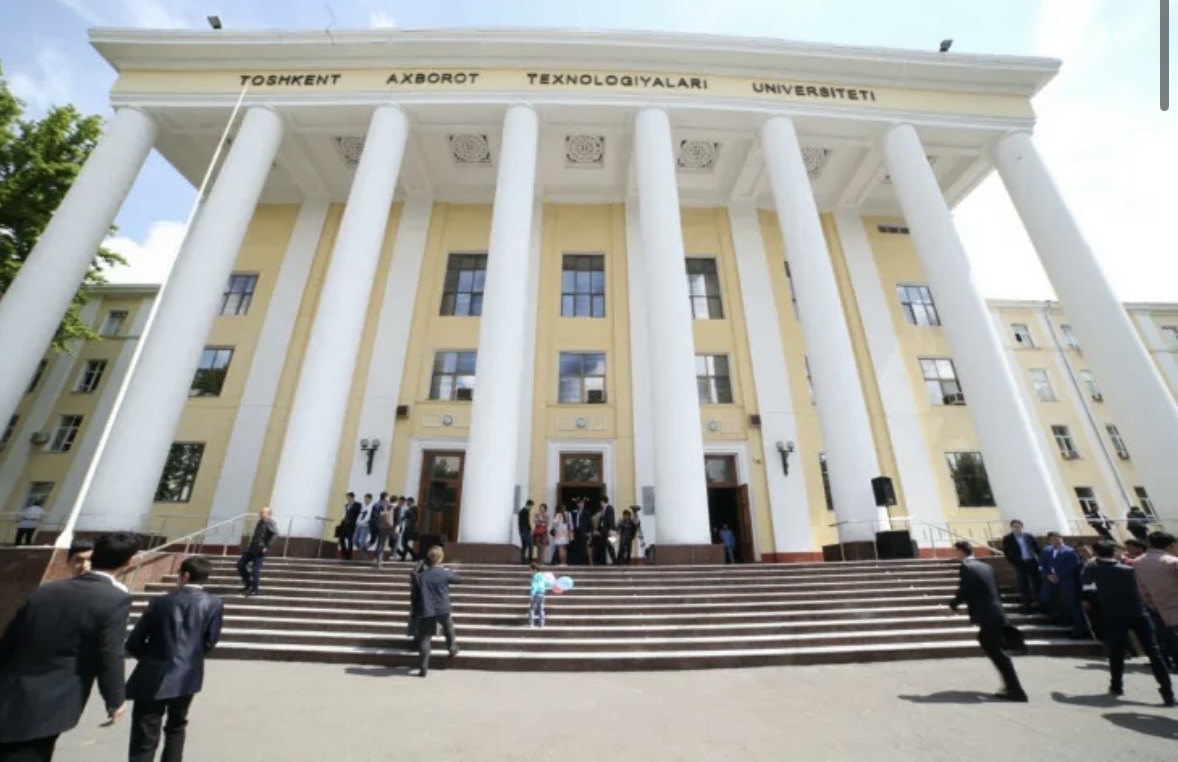
Statistical Overview of Turkmen Students Enrolled in Uzbekistan Universities
30 Apr. 11:49According to the latest report from the Statistics Agency of Uzbekistan, Turkmenistan continues to lead in the number of citizens pursuing higher education within the country. As of the first quarter of the current year, a total of 7,174 Turkmen nationals are officially enrolled in various academic programs across Uzbekistan’s higher education institutions.
Turkmenistan holds a significant lead over other nations in terms of student representation. India follows in second place with 2,835 students, while Tajikistan ranks third with 1,170 representatives. Other notable contributors to the international student body include the People's Republic of China and the Kyrgyz Republic, with 641 and 483 students, respectively.
The data indicates that the total number of foreign students currently studying in Uzbekistan stands at 15,124. Turkmen students account for nearly half of this international demographic, highlighting a strong educational preference and robust cross-border academic mobility between the two neighboring Central Asian states.
This trend underscores the deepening bilateral cooperation in the fields of science and education. Analysts suggest that geographic proximity and the alignment of educational standards facilitate this influx. The consistent rise in enrollment figures reflects the growing prestige of regional academic centers among Turkmenistan’s youth.
Also read



Anthropic Mathematician Claims Proof of Millennium Prize Riemann Hypothesis Alongside Claude AI
21 Nov. 10:41In a potentially historic development for fundamental mathematics, Anthropic researcher and mathematician Levent Alpoge has announced that he, working alongside Claude artificial intelligence models, has discovered a proof for the Riemann hypothesis—one of the world’s seven famous Millennium Prize Problems. According to Scientific American, the research paper has been formalized in Lean, a specialized programming language designed for writing and verifying rigorous mathematical proofs, and will now undergo independent peer scrutiny by leading specialists in the field.
Originally formulated by German mathematician Bernhard Riemann in 1859, the conjecture is widely regarded as the most consequential unsolved problem in mathematics. Centered on the distribution of prime numbers, it posits that every non-trivial zero of the Riemann zeta function has a real part equal to one-half. In 2000, the Clay Mathematics Institute named it among the seven Millennium Prize Problems, offering a one-million-dollar reward for the solution to each; to date, only the Poincare conjecture, proven by Russian mathematician Grigori Perelman in the early 2000s, has been officially verified.
Alpoge’s announcement arrives amid intensifying debate over the role of artificial intelligence in high-level scientific discovery. Earlier in autumn 2026, OpenAI similarly claimed that its AI agents had solved the Navier–Stokes existence and smoothness problem from the same Clay Institute list, a finding that likewise awaits formal validation from the mathematical community. Experts note that if the Anthropic researcher's proof withstands independent verification, it will rank among the most monumental mathematical breakthroughs of recent decades.
Blitz