
Playlist
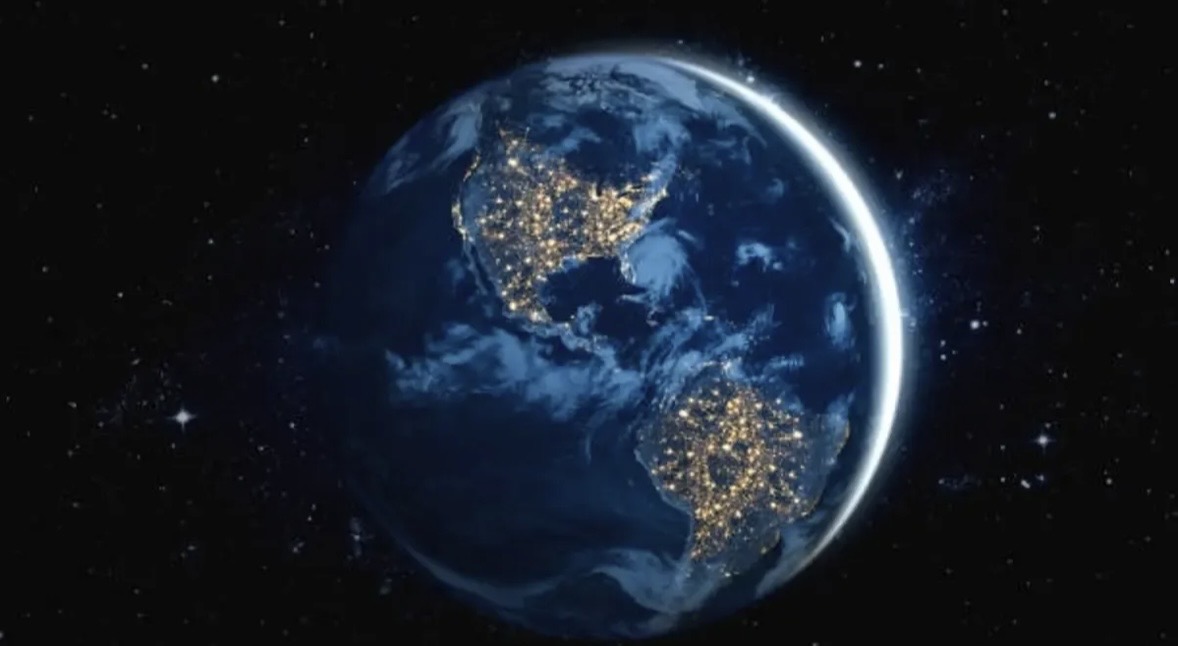
Scientists have reported a consistent annual increase in Earth’s night-time artificial lighting. However, the intensity of this brightening is not uniform across the globe and varies significantly depending on regional economic factors and energy policies. This shift provides critical insight into the changing patterns of global urbanization and energy consumption.
Researchers at the University of Connecticut analyzed over 1.1 million satellite images captured over the past decade. The findings indicate that between 2014 and 2022, the planet's artificial illumination rose by 16%. While many parts of the world are glowing brighter, certain areas have actually become dimmer during the same period.
Asia leads the growth in nocturnal brightness, particularly in China and India, where urbanization has driven a dramatic increase in city lights. In the United States, major cities along the West Coast have also become significantly brighter as a result of rapid population growth and urban expansion.
In contrast, Europe has seen a noticeable decline in night-time lighting due to aggressive energy efficiency measures. According to The Guardian, illumination decreased by 33% in France, 22% in the UK, and 21% in the Netherlands. Meanwhile, in Venezuela, night-time brightness dropped by 26%, a change largely attributed to the country's ongoing economic instability.
Scientists emphasize that making this data publicly accessible is vital for energy, economic, and environmental security. Given the global concern over the excessive waste of energy resources, monitoring the planet’s brightness helps in developing more sustainable strategies for resource management and mitigating light pollution.




A rye-wheat loaf preserved in a freezer for 36 years has been put on public display as part of the permanent exhibition at the Deutschlandmuseum in Berlin. Dubbed "The Last Loaf of the GDR," it was originally purchased on June 26, 1990, by student Michael Hagedorn, who bought an extra loaf fearing potential food shortages amidst the economic unification of East and West Germany.
The museum's director, Robert Rückel, described the unusual artifact as a unique poignant symbol of everyday human decisions during times of monumental geopolitical change. To maintain its preserved state, the museum installed a custom refrigeration unit where the historical loaf remains permanently frozen for visitors to view.
Blitz