
Playlist

Scientists Explain Why Academic Underachievers Often Excel in Their Careers
05 May. 04:12The phenomenon where students with average or poor academic records later achieve significant success as entrepreneurs or corporate leaders has long been a subject of public curiosity. Recent scientific studies suggest that this is not a matter of luck but rather a result of specific behavioral patterns. While formal education systems tend to reward those who strictly follow rules and memorize data, the professional world often demands qualities that are not captured by traditional grading systems.
Researchers point out that students who struggle with academic constraints often develop a high degree of cognitive flexibility. By questioning established rules and seeking non-traditional solutions to problems, these individuals cultivate an entrepreneurial mindset. This ability to spot opportunities where others see only barriers allows them to navigate the complexities of the business world more effectively. Their success is rooted in a natural inclination toward innovation rather than mere compliance with instructions.
Early exposure to real-world experiences also provides a significant advantage for those who prioritize practical application over theory. Many underachieving students focus their energy on social interactions, side projects, or early employment, gaining a deeper understanding of how economic and social systems function. This "street smarts" approach equips them with essential leadership and communication skills that are often overlooked in a classroom setting, giving them a head start in competitive environments.
Finally, resilience in the face of failure is identified as a key factor in long-term career growth. Individuals who become accustomed to criticism and low marks early on tend to develop a thicker skin, making them less fearful of taking risks or experiencing professional setbacks. This emotional durability allows them to pivot quickly and persist where others might give up. Ultimately, qualities such as adaptability, initiative, and the courage to act under uncertainty prove to be more decisive factors for success than academic performance.
Also read


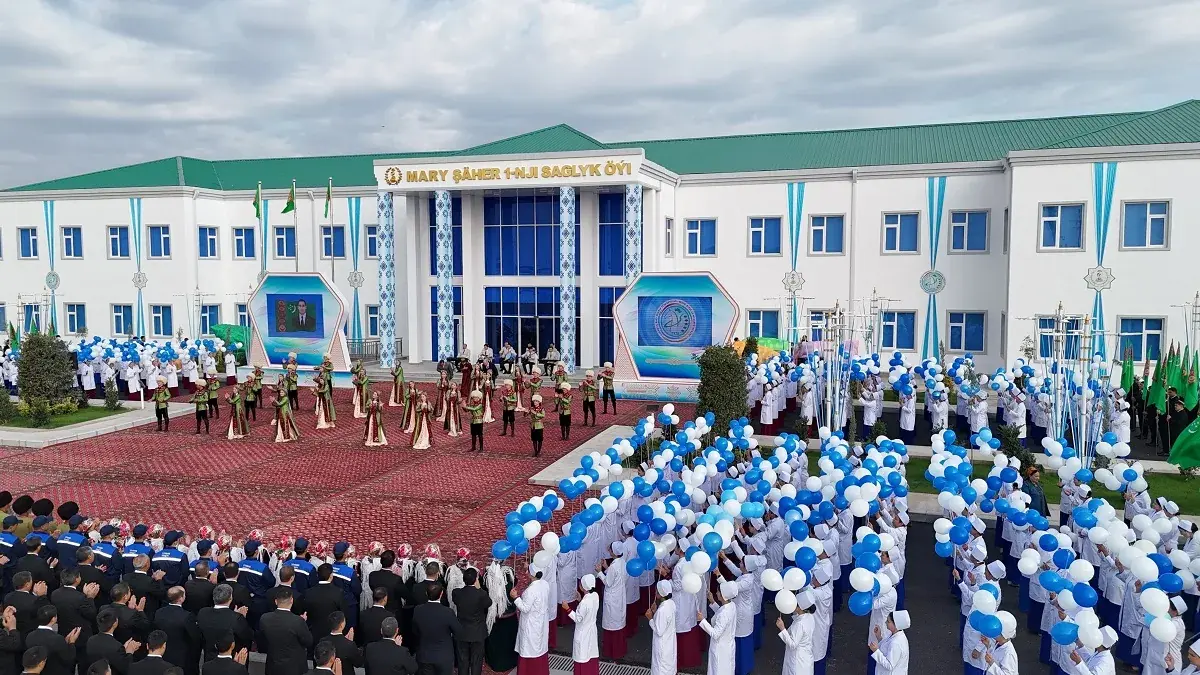
To mark the National Healthcare and Pharmaceutical Industry Workers' Day, Health Center No. 1 in Mary, located along Oguzkhan Street, was officially reopened following a comprehensive structural renovation. The inauguration ceremony brought together regional administration officials, members of parliament and the Halk Maslahaty, healthcare specialists, community elders, and local students. Festive musical and theatrical performances by cultural groups and young talents added to the celebratory atmosphere.
The newly reconstructed two-story medical complex is outfitted with state-of-the-art diagnostic and treatment rooms, family medicine suites, bacteriological and physiotherapy departments, as well as specialized laboratories. Equipped with advanced European medical technology, the center offers a full suite of services including ultrasound, echocardiography, electrocardiography, and endoscopy.
The renovation project was successfully carried out by the local private construction enterprise "Yhlasa Ynam." During the official ceremony, outstanding construction workers were awarded valuable commemorative gifts presented on behalf of the President of Turkmenistan.
Additionally, to boost mobile diagnostic capabilities in the region, a fully equipped "Mercedes-Benz" mobile medical unit featuring digital X-ray and fluorography technology was officially presented to the health center on behalf of the Head of State.
Blitz