
Playlist
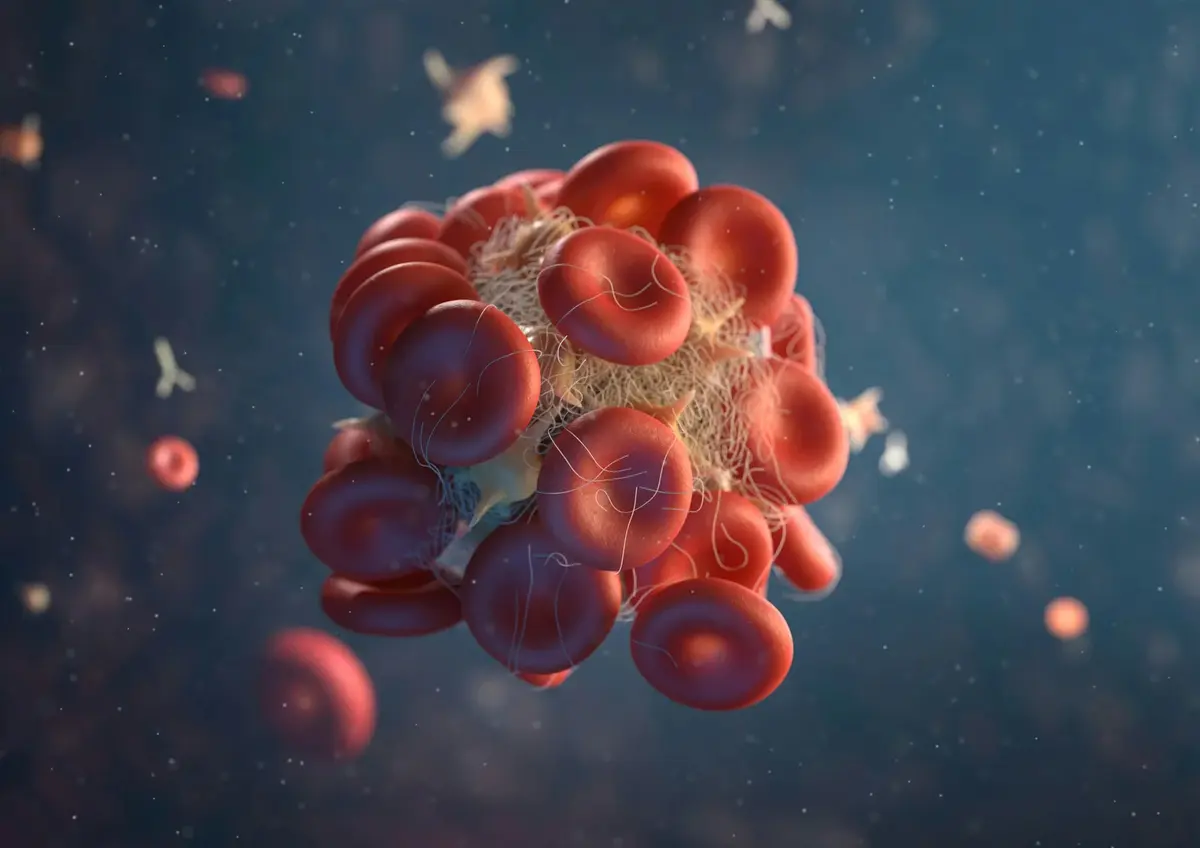
An international team of researchers has revealed that the formation of blood clots occurs differently than previously understood. According to a report by the Financial Times, this discovery could open new avenues for treating blood coagulation disorders.
Scientists from France, Great Britain, and Sweden examined the behavior of fibrinogen—a protein essential for blood clotting—at the Laue-Langevin Institute in Grenoble. It was previously believed that fibrinogen molecules arranged themselves into a single tilted layer when exposed to air. However, new experiments demonstrated that the molecules align horizontally, forming stacked, multi-layered structures similar to sheets of paper.
The findings could prove valuable in developing advanced treatments for hemophilia and improving glucose monitoring techniques for individuals with diabetes. Additionally, understanding fibrinogen behavior holds potential for treating severe respiratory distress where protein infiltration into alveoli leads to pulmonary complications.
Also read




Simple Vitamin Shows Surprising Results in Pre-Cancerous Blood Conditions, Study Finds
Today in 02:02Daily high-dose supplementation of vitamin C can significantly reduce mortality risks and help prevent severe medical complications in patients with pre-cancerous blood conditions. Researchers from the Van Andel Institute in the United States and Copenhagen University Hospital in Denmark reached this conclusion following a comprehensive three-year follow-up study. The international "EVITA" trial involved volunteers who were administered 1,000 mg of vitamin C daily over the course of a year, while a control group received a placebo.
Although initial hypotheses suggested vitamin C might directly inhibit abnormal cell proliferation, researchers found its primary benefit lay in strengthening the body, reducing systemic inflammation, and lowering rates of anemia, pneumonia, and internal bleeding. Over the three-year observation period, the vitamin C group exhibited a significantly higher survival rate compared to the placebo group. While experts emphasize that these findings remain preliminary and require larger clinical trials before reshaping formal medical treatment protocols, vitamin C continues to show promising potential in supportive patient care.
Blitz