
Playlist
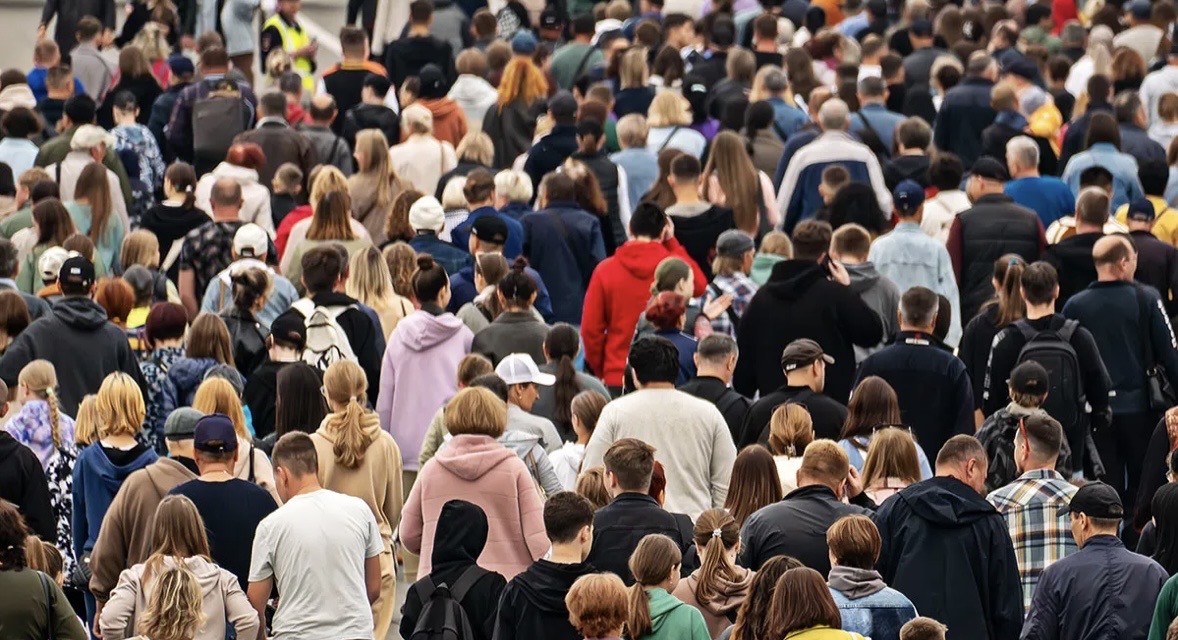
Scientific Study Reveals Earth’s Population Has Surpassed the Planet’s Carrying Capacity
13 Apr. 13:39A team of Australian scientists from Flinders University has determined that the global population size and the corresponding rate of resource consumption have significantly exceeded the Earth’s natural limits. Led by Professor Corey Bradshaw, the research team synthesized data spanning over two hundred years to evaluate the sustainability of modern human civilization. The findings, reported by RIA Novosti via the Science Alert portal, suggest a growing ecological crisis.
The researchers calculated that while the current global population stands at approximately 8.3 billion people, the Earth can only sustainably support about 2.5 billion individuals. This discrepancy indicates that human presence is currently three times larger than what the planet’s biological systems can handle without long-term degradation. This overextension poses a severe threat to biodiversity and the availability of essential natural resources.
Professor Bradshaw noted that the Earth is struggling to keep pace with the modern intensity of resource extraction and waste production. He emphasized that the planet is incapable of meeting present-day demands without large-scale structural changes, as the current anthropogenic pressure is simply too immense for natural recovery cycles. The study highlights that the rapid depletion of natural capital is outstripping the planet's ability to regenerate.
The report calls for urgent global action and a fundamental shift in how societies interact with the environment. Experts suggest that unless comprehensive reforms are implemented to curb consumption and manage population growth, the risk of systemic ecological failure increases. This scientific evaluation serves as a critical reminder of the need for sustainable development policies to ensure the viability of future generations.
Also read

A rye-wheat loaf preserved in a freezer for 36 years has been put on public display as part of the permanent exhibition at the Deutschlandmuseum in Berlin. Dubbed "The Last Loaf of the GDR," it was originally purchased on June 26, 1990, by student Michael Hagedorn, who bought an extra loaf fearing potential food shortages amidst the economic unification of East and West Germany.
The museum's director, Robert Rückel, described the unusual artifact as a unique poignant symbol of everyday human decisions during times of monumental geopolitical change. To maintain its preserved state, the museum installed a custom refrigeration unit where the historical loaf remains permanently frozen for visitors to view.
Blitz