
Playlist
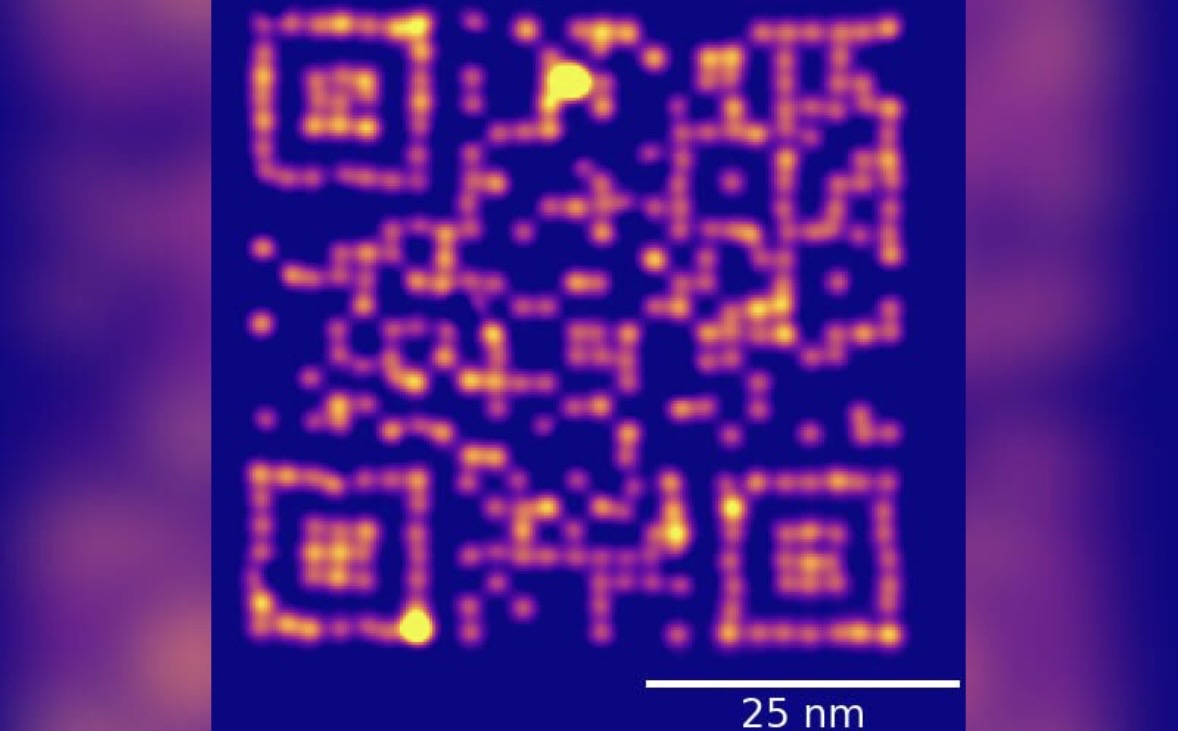
Physicists Engineer Record-Breaking Atomic-Scale Matrix Barcode Using Silver Particles
13 Jun. 10:00A collaborative research initiative involving the Monash University in Australia and the Czech Academy of Sciences has resulted in a breakthrough in nanotechnology. Scientists have successfully fabricated a functioning matrix barcode with dimensional attributes that challenge the absolute physical limits of data serialization. The newly developed model represents a significant leap forward in high-density data storage capabilities at the atomic level.
The structural composition of the micro-matrix relies on individual silver atoms, positioned via a scanning tunneling microscope to serve as distinct pixels. The entire data architecture measures precisely 50 by 50 nanometers, effectively matching the structural dimensions of a standard COVID-19 viral particle. This architectural configuration is roughly 800 times smaller than the previous milestone verified in the field of non-volatile micro-data storage.
The fabrication process required an environment characterized by ultra-high vacuum conditions and cryogenic temperatures to ensure atomic stability during deployment. The metallic particles were arranged utilizing an ultra-fine probe, and specialized calibration parameters were implemented into the structure to enable error-free scanning and decryption of the encoded data payload.
The research team has officially submitted documentation to international record registries to validate the achievement, which eclipses a prior record established earlier this year by Viennese scientists and commercial data storage developers. While the technical achievement is historic, industry competitors note that practical commercial applications remain limited due to the necessity of maintaining vacuum seals and low-temperature parameters to preserve data integrity.
Also read




On-the-Go Power: Japanese Engineers Develop Wireless In-Road Charging for Electric Vehicles
10 Oct. 08:10In a major leap for electric mobility, Honda R&D, alongside Taisei Corporation and Taisei Rotec, has unveiled an innovative dynamic wireless charging system that charges electric vehicles as they drive. By embedding compact energy-transmitting modules directly into the road surface, the system transfers power via a magnetic field to receivers mounted underneath moving vehicles. Designed to withstand heavy commercial transport up to 20 tons, real-world road testing is scheduled to begin in Japan in April 2027.
The technology eliminates the need for full road reconstruction, as modules can be integrated directly into milled asphalt layers. Aimed at boosting charging power up to 150 kW in future iterations, this infrastructure solution promise to significantly reduce grid pressure on traditional charging stations, particularly for logistics and commercial fleets.
Blitz