
Playlist
Minerals That Form Rubies and Sapphires Discovered on Mars for the First Edition
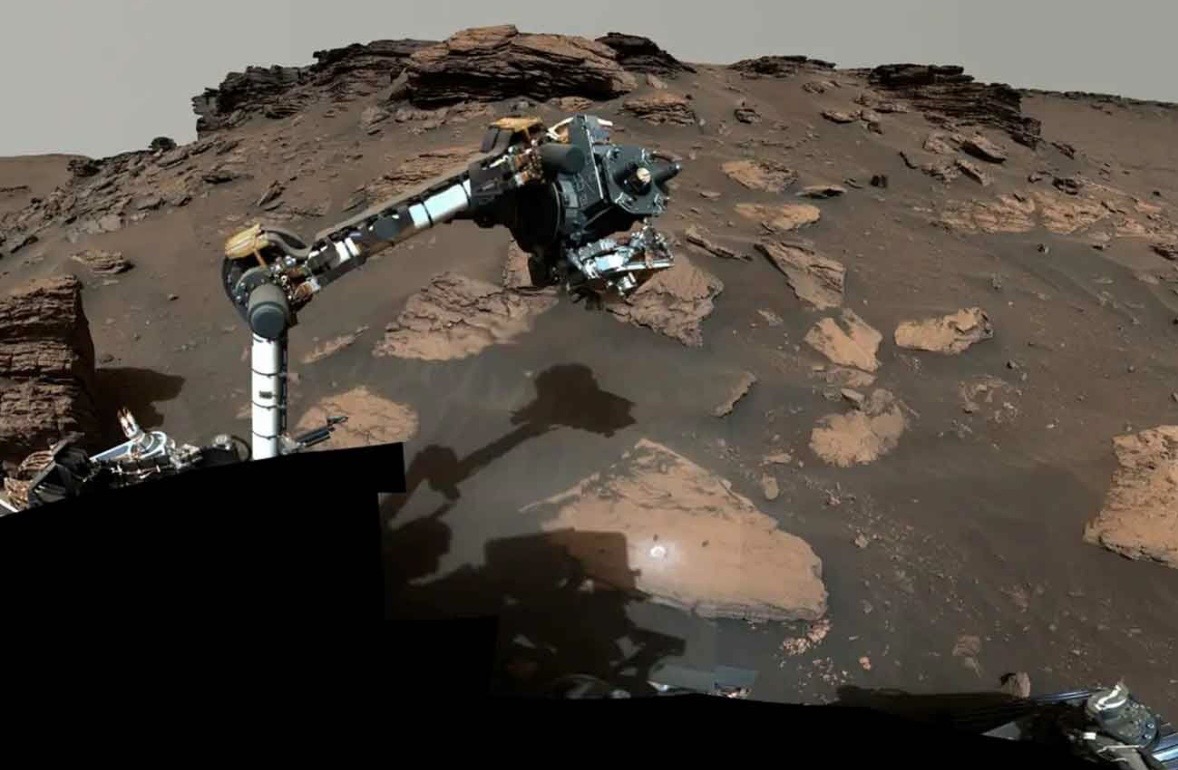
22 Mar. 13:56The NASA "Perseverance" rover has detected spectral signatures of corundum—the mineral responsible for the formation of rubies and sapphires on Earth—for the first time on Mars. These traces were found within the rock formations located along the rim of the Jezero Crater. Scientists are now working to understand the specific environmental conditions on Mars that allowed this mineral to form, as they differ significantly from terrestrial geological processes.
The NASA spacecraft landed in the Jezero Crater in February 2021. This location was specifically selected due to the evidence of past water activity, raising hopes of finding signs of ancient microbial life. The discovery of corundum suggests that the geological history of the crater is more complex than previously thought, involving high-temperature or high-pressure events that led to the crystallization of such hard minerals.
To analyze the composition of Martian rocks, the rover utilizes the "SuperCam" instrument. It fires a laser beam at rock surfaces, vaporizing a tiny amount of material to create plasma. The light emitted by this plasma is then analyzed and compared with known mineral spectra. This non-contact method allows researchers to identify chemical elements and mineral structures from a distance, providing high-precision data from the Martian surface.
A team of scientists from the Los Alamos National Laboratory, led by Ann Ollila, examined bright inclusions in three specific rock samples: Hampden_River, Coffee_Cove, and Smiths_Harbour. While it was initially assumed that these features consisted mainly of plagioclase, the analysis revealed clear signs of trivalent chromium. This signature definitively indicates the presence of corundum, marking a significant milestone in Martian mineralogy.
Also read




On-the-Go Power: Japanese Engineers Develop Wireless In-Road Charging for Electric Vehicles
10 Oct. 08:10In a major leap for electric mobility, Honda R&D, alongside Taisei Corporation and Taisei Rotec, has unveiled an innovative dynamic wireless charging system that charges electric vehicles as they drive. By embedding compact energy-transmitting modules directly into the road surface, the system transfers power via a magnetic field to receivers mounted underneath moving vehicles. Designed to withstand heavy commercial transport up to 20 tons, real-world road testing is scheduled to begin in Japan in April 2027.
The technology eliminates the need for full road reconstruction, as modules can be integrated directly into milled asphalt layers. Aimed at boosting charging power up to 150 kW in future iterations, this infrastructure solution promise to significantly reduce grid pressure on traditional charging stations, particularly for logistics and commercial fleets.
Blitz