
Playlist
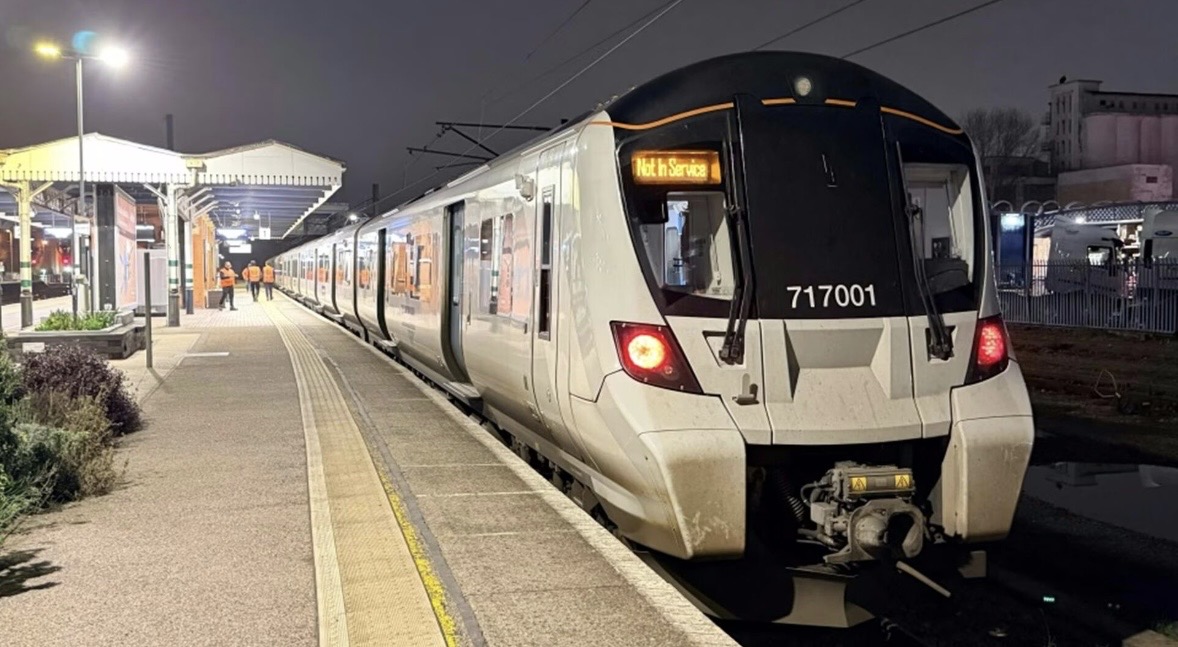
United Kingdom Conducts World-First Quantum Navigation Trials on Mainline Trains
05 Apr. 04:23The United Kingdom has achieved a significant technological milestone by successfully testing a quantum navigation system on a commercial railway line. The trials, conducted on the Great Northern route between London and Welwyn Garden City, represent a global first for integrating quantum-grade sensors into transport infrastructure. The Railway Quantum Inertial Navigation System (RQINS) offers a revolutionary alternative to satellite-based positioning, ensuring continuous tracking without reliance on external signals.
Unlike traditional GPS systems, which are prone to signal loss in tunnels, deep cuttings, or urban canyons, the quantum system operates autonomously. By utilizing highly sensitive inertial sensors, the technology precisely calculates a train's location by measuring every increment of movement and change in direction. According to industry experts, this "satellite-free" approach provides a level of reliability and accuracy that is currently unattainable with existing commercial navigation tools.
The initiative was a collaborative effort involving major industry stakeholders, including Network Rail, Great British Railways, and Govia Thameslink Railway, with support from Innovate UK. The testing phase focused on evaluating the system's performance in a dynamic railway environment, proving that quantum sensors can withstand the vibrations and operational rigors of daily train services. The project is part of a broader national effort to establish the UK as a global leader in applied quantum science and technology.
The long-term implementation of quantum navigation is expected to modernize railway operations by reducing the need for costly trackside infrastructure and ground-based monitoring equipment. By providing an unhackable and resilient positioning solution, this technology enhances the safety and efficiency of the rail network. As the UK continues to invest in innovation, quantum-based systems are poised to redefine the standards for global transportation and logistics in the 21st century.
Also read




On-the-Go Power: Japanese Engineers Develop Wireless In-Road Charging for Electric Vehicles
10 Oct. 08:10In a major leap for electric mobility, Honda R&D, alongside Taisei Corporation and Taisei Rotec, has unveiled an innovative dynamic wireless charging system that charges electric vehicles as they drive. By embedding compact energy-transmitting modules directly into the road surface, the system transfers power via a magnetic field to receivers mounted underneath moving vehicles. Designed to withstand heavy commercial transport up to 20 tons, real-world road testing is scheduled to begin in Japan in April 2027.
The technology eliminates the need for full road reconstruction, as modules can be integrated directly into milled asphalt layers. Aimed at boosting charging power up to 150 kW in future iterations, this infrastructure solution promise to significantly reduce grid pressure on traditional charging stations, particularly for logistics and commercial fleets.
Blitz