
Playlist
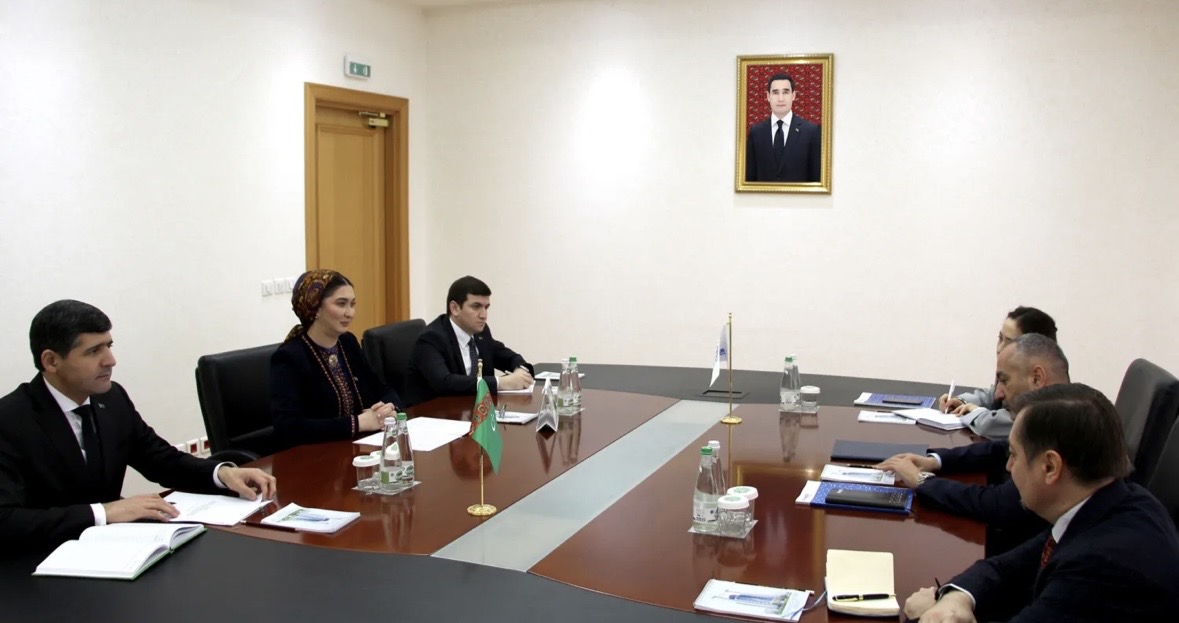
On March 18, Deputy Foreign Minister of Turkmenistan Mahri Bashimova met with Mahir Safarli, the newly appointed Regional Representative of the United Nations High Commissioner for Refugees (UNHCR) for Central Asia. During the meeting, Mr. Safarli presented his credentials to the Turkmen side. The Deputy Minister congratulated him on his appointment and wished him success in his mission, expressing confidence that his tenure would further strengthen the long-standing humanitarian partnership between Turkmenistan and the UNHCR.
The discussions focused on the current status and future directions of cooperation between Turkmenistan and the UNHCR. Particular attention was paid to the issue of ending statelessness, a field where Turkmenistan has achieved significant milestones. Both parties highlighted the successful implementation of the National Action Plan for 2019–2024, noting that Turkmenistan’s experience in granting citizenship to thousands of stateless persons serves as a global model for humanitarian action and legal protection.
The parties also discussed Turkmenistan's participation in global UNHCR initiatives, such as its involvement in the Global Alliance to End Statelessness and its contributions to Global Refugee Forums. Furthermore, they explored opportunities for collaboration regarding Turkmenistan's initiative to declare 2028 as the International Year of International Law. This proposal aims to bolster the principles of international law and humanitarian diplomacy in addressing contemporary global challenges.
Concluding the meeting, the officials exchanged views on regional security and the importance of preventive measures in averting humanitarian crises. Organizational matters, including the preparation of a joint action plan for the upcoming period, were also discussed. Both sides reaffirmed their commitment to deepening strategic ties to ensure the protection of human rights and the promotion of regional stability under the framework of UN humanitarian values.
Also read

Tech Giant Amazon Negotiates Landmark $7 Billion Acquisition of AI Startup Decart
Today in 11:31Amazon is reportedly in advanced talks to acquire the Israeli artificial intelligence startup Decart in a deal valued at approximately $7 billion, according to The Wall Street Journal. Founded in 2023, Decart specializes in software that seamlessly bridges various AI processors and develops generative 3D world models such as "Lucy" and "Oasis." The startup had previously reached a $4 billion valuation earlier this year after raising over $400 million from major venture funds.
The strategic acquisition is poised to boost Amazon’s AWS cloud computing division, enhancing its proprietary Trainium3 AI chips to better compete against market leader Nvidia in generative AI hardware infrastructure.
Blitz