
Playlist

Kyrgyzstan State Authorities Officially Enact Twelve-Year School Education System
30 Jun. 16:54The Government of the Kyrgyz Republic has finalized and approved statutory amendments regulating the restructuring of the national secondary educational framework. The official decree mandates that comprehensive schools nationwide transition to a compulsory 12-year academic format, aligning the country's standards with international practices.
Under the newly updated instructional protocol, the academic journey is structurally divided into three successive phases. The primary educational tier is extended to six years, followed by a three-year intermediate level, and concluding with a three-year senior high school curriculum, bringing the total duration to twelve academic years.
The operational school year is regulated to span a minimum of 34 weeks, with specific adjustments designated for first- and second-grade pupils to ease their transition. Furthermore, the updated guidelines ensure that total seasonal vacation intervals comprise at least 30 days, while the summer break is maintained at a minimum of 14 weeks.
The structural modification is primarily designed to recalculate student workloads and optimize pedagogical efficiency across all grade levels. This regulatory policy is scheduled to become legally effective exactly ten days following its formal public issuance.
Also read



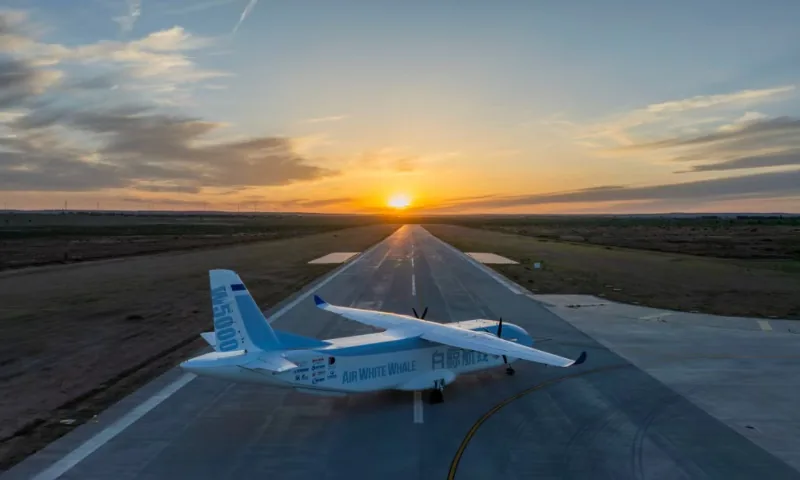
World’s Largest Unmanned Cargo Aircraft Completes Maiden Flight in China
17 Nov. 16:55The Chinese-developed W5000, billed by its creators at Air White Whale as the world’s largest unmanned cargo plane, has successfully completed its maiden test flight in Inner Mongolia. Boasting a 65-cubic-meter cargo hold, the aircraft is engineered to carry payloads of up to five tons across distances reaching 2,600 kilometers.
During the trial, the aircraft lifted off after a roughly 600-meter runway roll, climbed to an altitude of 2,000 meters, and remained airborne for about 30 minutes before making a smooth landing. Operating entirely without onboard pilots, the W5000 relies on autonomous flight controls monitored by ground-based specialists, who verified the seamless integration of its propulsion, avionics, and data-link systems.
Powered by a domestically produced turboprop engine, the airframe consists of nearly 65% carbon-fiber composite materials. This lightweight structural design reduces overall empty weight while maximizing the share of takeoff mass dedicated to freight.
Developers envision deploying the W5000 for regional logistics, temperature-controlled deliveries, and emergency relief operations. Because the design eliminates cockpit equipment and flight crew expenses while cutting fuel burn, the manufacturer estimates per-ton-kilometer shipping costs will be over 60% lower than those of comparable manned cargo aircraft.
Blitz