
Playlist

Japanese Prefectures Introduce Flexible 'Learncation' Days to Support Family Bonding
10 Jun. 05:10Educational institutions in Japan’s Okinawa prefecture and several other regions have begun implementing a structured program that allows students to take specialized leaves of absence to spend time with their families. The school reform addresses the scheduling challenges faced by working parents, allowing children to temporarily step away from the classroom during non-holiday periods.
According to statistical evaluations, 15 municipal governments have already integrated this framework into their academic schedules under the conceptual term "learncation"—a hybrid of learning and vacation. The primary structural advantage of this system is that authorized absences are not recorded as unexcused, thereby protecting the student’s formal attendance record from negative evaluations.
The concept was originally introduced in Aichi prefecture in 2023, where students were permitted up to three days of customized leave per year. The initiative expanded further in April of this year, with regions like Taketomi increasing the entitlement to five days, while national projections aim to establish the system across 41 municipalities by the end of 2026.
This structural shift has proven highly beneficial for parents employed in seasonal industries, hospitality, or diving services, who face peak workloads during traditional school holidays like Golden Week. The newly established flexible leave policy allows these households to coordinate alternative winter travel and recreational activities without disrupting their children’s academic standing.
Also read



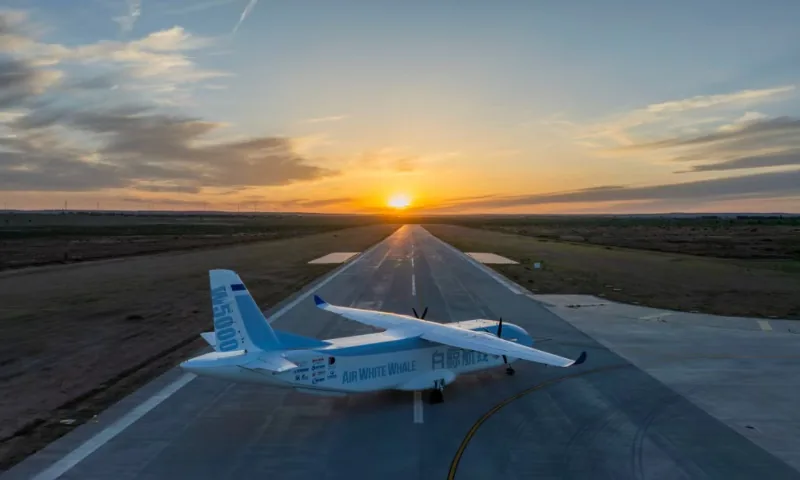
World’s Largest Unmanned Cargo Aircraft Completes Maiden Flight in China
17 Nov. 16:55The Chinese-developed W5000, billed by its creators at Air White Whale as the world’s largest unmanned cargo plane, has successfully completed its maiden test flight in Inner Mongolia. Boasting a 65-cubic-meter cargo hold, the aircraft is engineered to carry payloads of up to five tons across distances reaching 2,600 kilometers.
During the trial, the aircraft lifted off after a roughly 600-meter runway roll, climbed to an altitude of 2,000 meters, and remained airborne for about 30 minutes before making a smooth landing. Operating entirely without onboard pilots, the W5000 relies on autonomous flight controls monitored by ground-based specialists, who verified the seamless integration of its propulsion, avionics, and data-link systems.
Powered by a domestically produced turboprop engine, the airframe consists of nearly 65% carbon-fiber composite materials. This lightweight structural design reduces overall empty weight while maximizing the share of takeoff mass dedicated to freight.
Developers envision deploying the W5000 for regional logistics, temperature-controlled deliveries, and emergency relief operations. Because the design eliminates cockpit equipment and flight crew expenses while cutting fuel burn, the manufacturer estimates per-ton-kilometer shipping costs will be over 60% lower than those of comparable manned cargo aircraft.
Blitz