
Playlist

The Italian government has officially greenlit the construction of a monumental suspension bridge spanning the Strait of Messina. With a record-breaking central span of 3.2 kilometers, this engineering marvel is set to become the longest of its kind globally. The project marks a historic milestone in the country's efforts to enhance national connectivity and modernize its transport framework.
The massive undertaking, estimated to cost approximately 16 billion dollars, is scheduled to commence construction within the current calendar year. By its projected completion in 2033, the bridge will provide a permanent link between the island of Sicily and the Italian mainland. Once finished, it will eclipse the current record-holder, the Çanakkale Bridge in Turkey, as a premier infrastructure asset in the Western world.
Technically, the bridge will rely on two massive 399-meter-high towers, allowing the structure to span the waters without the need for intermediate marine supports. The design includes six dedicated lanes for vehicular traffic alongside two railway tracks. This dual-purpose configuration is designed to handle high volumes of transit while integrating seamlessly into the broader European logistics network.
Officials from the Ministry of Infrastructure and leadership from the Webuild construction firm view this project as a cornerstone of the Trans-European Transport Network. Beyond its engineering prestige, the bridge is expected to serve as a primary catalyst for economic development in Southern Italy, facilitating trade and significantly reducing travel times across the region.
Also read



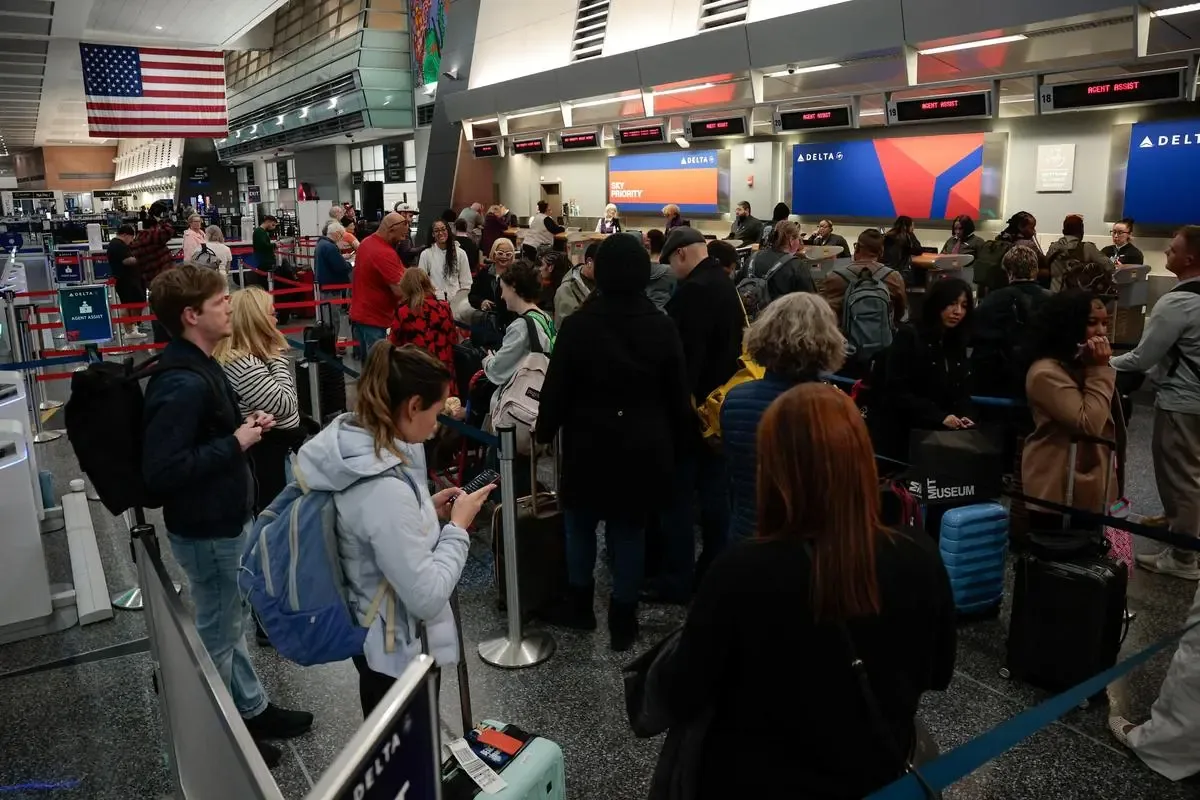
Nationwide Ground Stop Halts US Air Travel for Four Hours Following Major Telecommunications Failure
14 Nov. 07:16The United States Federal Aviation Administration (FAA) has officially lifted a nationwide ground stop that halted departures across all American airports for roughly four hours. According to CNN, the sweeping emergency suspension triggered severe disruptions throughout domestic and international aviation networks. During the four-hour freeze, airlines were forced to cancel more than 6,000 flights arriving in or departing from the United States.
Industry estimates indicate that the disruption directly impacted at least 1.5 million travelers—a figure that accounts solely for passengers whose flights were outright canceled, excluding the vast numbers affected by cascading delays. While investigators continue to determine the exact root cause of the incident, preliminary technical assessments point to a widespread failure of network routers that resulted in a major telecommunications outage, prompting the FAA to ground all outbound air traffic as a safety precaution.
Addressing concerns over potential external interference, US Secretary of Homeland Security Markwayne Mullin stated that federal authorities have found no evidence suggesting a malicious attack was behind the outage. He further clarified that the aviation communications breakdown is entirely unrelated to the widespread Microsoft system disruption that occurred earlier on November 13.
Blitz