
Playlist
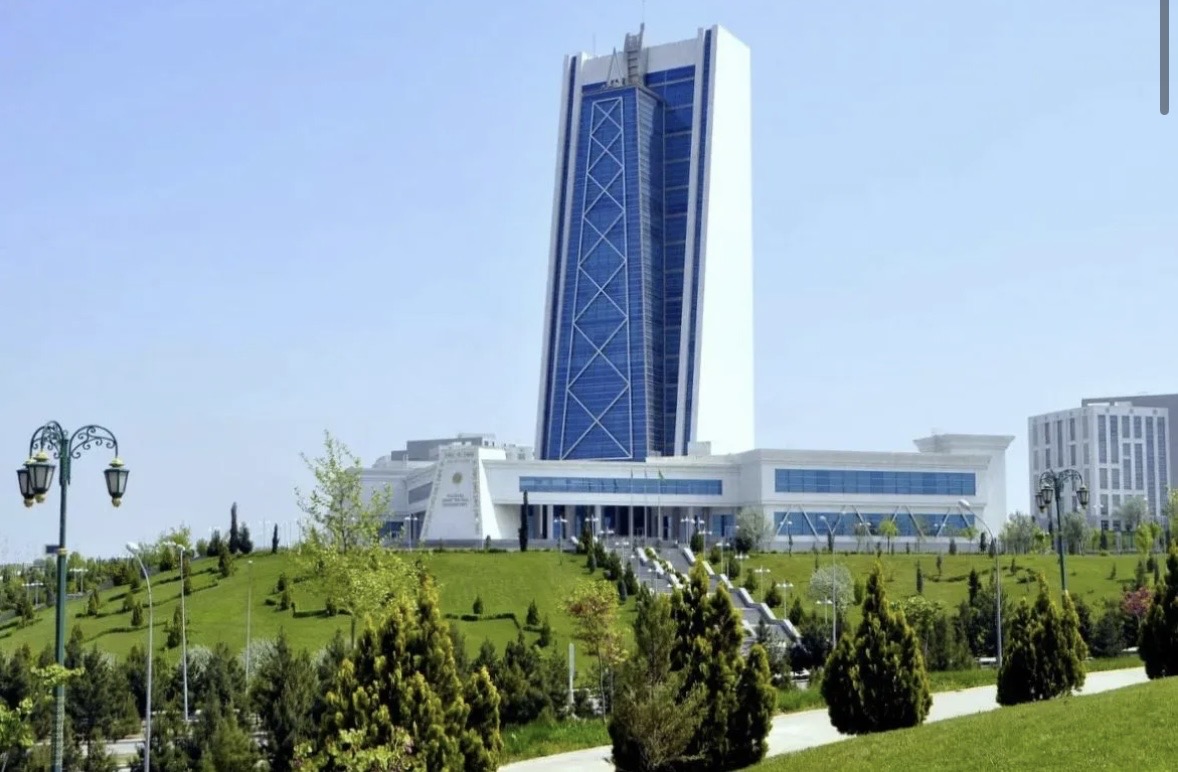
International Informatics Internet Olympiad Hosted at Turkmenistan’s Oil and Gas University
21 Apr. 08:37From April 15 to 16, the Yagshygeldi Kakayev International University of Oil and Gas hosted the 4th International Open Internet Olympiad in Informatics. This annual competition has successfully served as a premier platform for identifying and nurturing young talent in the digital sciences for four consecutive years. The event highlights Turkmenistan’s ongoing commitment to fostering international academic cooperation and digital literacy.
According to reports from the "Turkmenistan: Golden Age" news service, the Olympiad saw the participation of 793 students representing 57 higher education institutions from 17 countries. Participants hailed from diverse regions, including China, Germany, Turkey, Saudi Arabia, and several CIS nations. The large-scale involvement of international universities emphasizes the growing prestige of the competition and its role in bridging global academic communities.
The competition focused on the core pillars of the modern tech industry. After the opening ceremonies, students engaged in individual challenges covering algorithmic programming, data analytics, artificial intelligence, and cybersecurity. These tasks were designed to test the students' ability to solve real-world problems using advanced computational logic and creative technical solutions in a competitive environment.
Students from Turkmenistan achieved notable success, securing top honors across multiple categories. Representatives from the Institute of Telecommunications and Informatics, the State Energy Institute, and the Oguz Han University of Engineering and Technology were among the leading prize winners. These results demonstrate the high level of technical proficiency and academic preparation fostered within the nation’s specialized higher education system.
International participants also earned prestigious recognition, with students from Kazakhstan’s Satbayev University, Uzbekistan’s Bukhara State University, and Belarus’s Polotsk State University receiving 1st, 2nd, and 3rd-degree diplomas. The successful conclusion of this Olympiad reinforces the importance of international science competitions in developing a skilled global workforce ready to tackle the challenges of the digital age.
Also read

Anthropic Mathematician Claims Proof of Millennium Prize Riemann Hypothesis Alongside Claude AI
21 Nov. 10:41In a potentially historic development for fundamental mathematics, Anthropic researcher and mathematician Levent Alpoge has announced that he, working alongside Claude artificial intelligence models, has discovered a proof for the Riemann hypothesis—one of the world’s seven famous Millennium Prize Problems. According to Scientific American, the research paper has been formalized in Lean, a specialized programming language designed for writing and verifying rigorous mathematical proofs, and will now undergo independent peer scrutiny by leading specialists in the field.
Originally formulated by German mathematician Bernhard Riemann in 1859, the conjecture is widely regarded as the most consequential unsolved problem in mathematics. Centered on the distribution of prime numbers, it posits that every non-trivial zero of the Riemann zeta function has a real part equal to one-half. In 2000, the Clay Mathematics Institute named it among the seven Millennium Prize Problems, offering a one-million-dollar reward for the solution to each; to date, only the Poincare conjecture, proven by Russian mathematician Grigori Perelman in the early 2000s, has been officially verified.
Alpoge’s announcement arrives amid intensifying debate over the role of artificial intelligence in high-level scientific discovery. Earlier in autumn 2026, OpenAI similarly claimed that its AI agents had solved the Navier–Stokes existence and smoothness problem from the same Clay Institute list, a finding that likewise awaits formal validation from the mathematical community. Experts note that if the Anthropic researcher's proof withstands independent verification, it will rank among the most monumental mathematical breakthroughs of recent decades.
Blitz