
Playlist
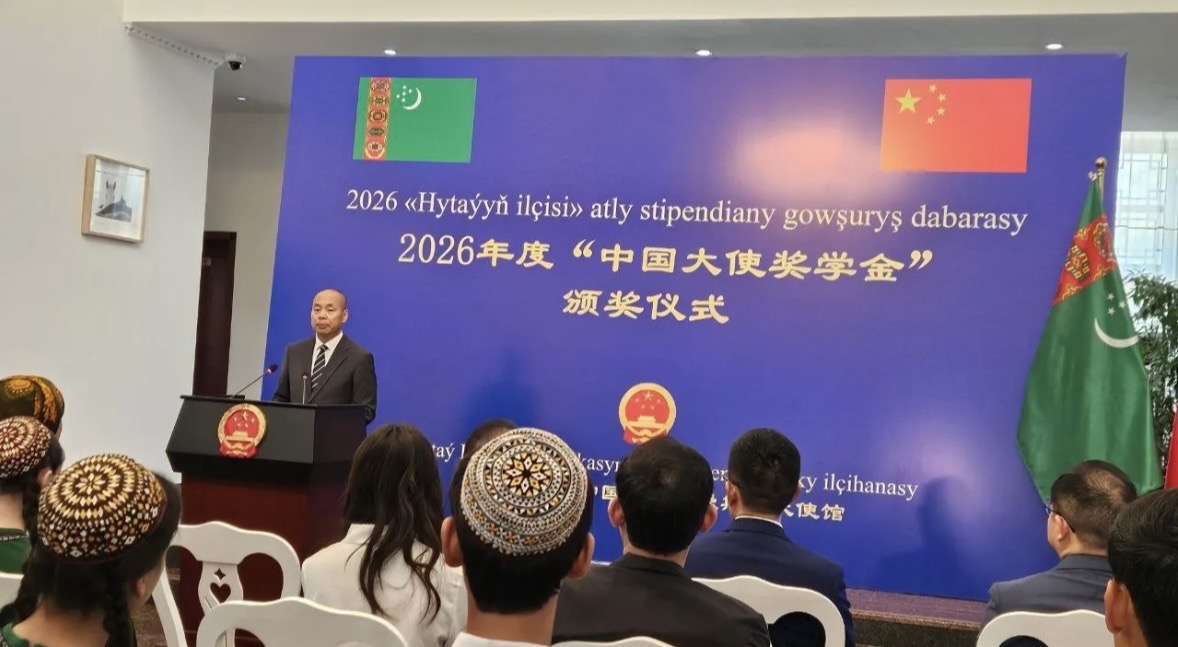
Educational Cooperation Between China and Turkmenistan Developing Successfully – PRC Ambassador
26 Jun. 11:13Educational cooperation between China and Turkmenistan is developing with great success, driven by the personal support and high priority alignment demonstrated by the top leadership of both nations. The Ambassador Extraordinary and Plenipotentiary of the People's Republic of China to Turkmenistan, Xi Shumin, shared these insights with journalists during an official ceremony held at the Chinese Embassy in Ashgabat. The event marked the presentation of the "Chinese Ambassador’s Scholarship," an initiative established by the diplomatic mission to encourage talented youth mastering the Chinese language. For the 2026 cycle, the first 20 recipients—comprising 10 university students and 10 school pupils—were selected based on a highly competitive language contest hosted at the Dovletmammet Azadi Turkmen National Institute of World Languages.
According to the diplomat, more than 10,000 Turkmen citizens are currently pursuing higher education in China, while the enrollment of Chinese students within Turkmenistan’s academic framework is experiencing steady growth. Ambassador Xi Shumin emphasized the profound mutual interest between the two nations in exploring each other’s languages, cultures, and traditions, framing this educational exchange as a direct reflection of the comprehensive development of bilateral strategic relations. Encouraging the scholarship winners, the Ambassador quoted a traditional Chinese proverb: "Learn Chinese, and you will find friends all over the world," while extending his warmest wishes for their future academic journeys.
Also read
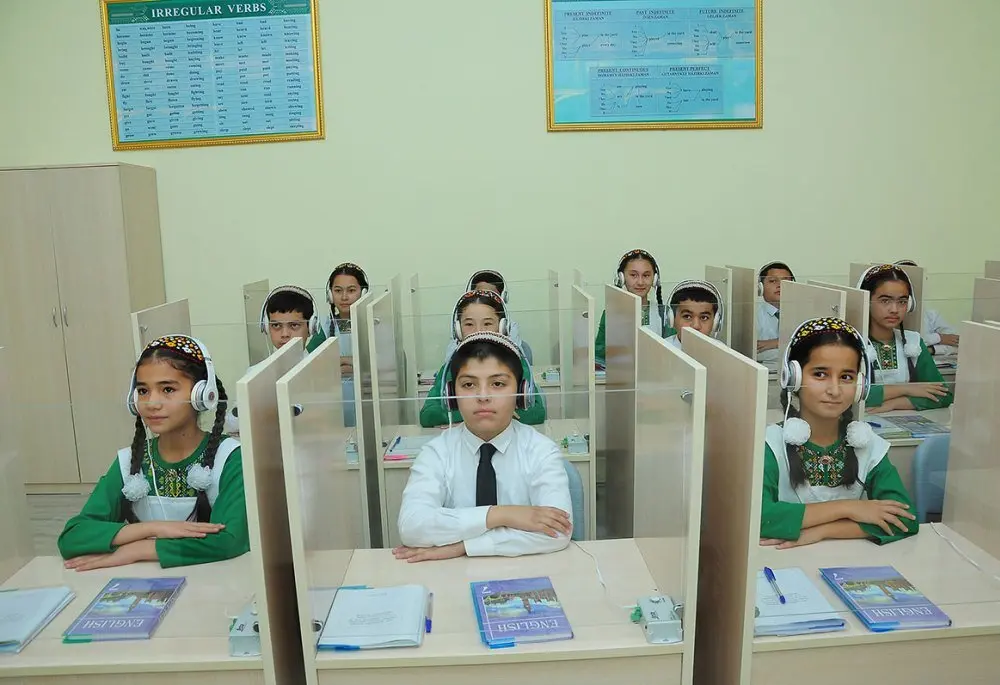
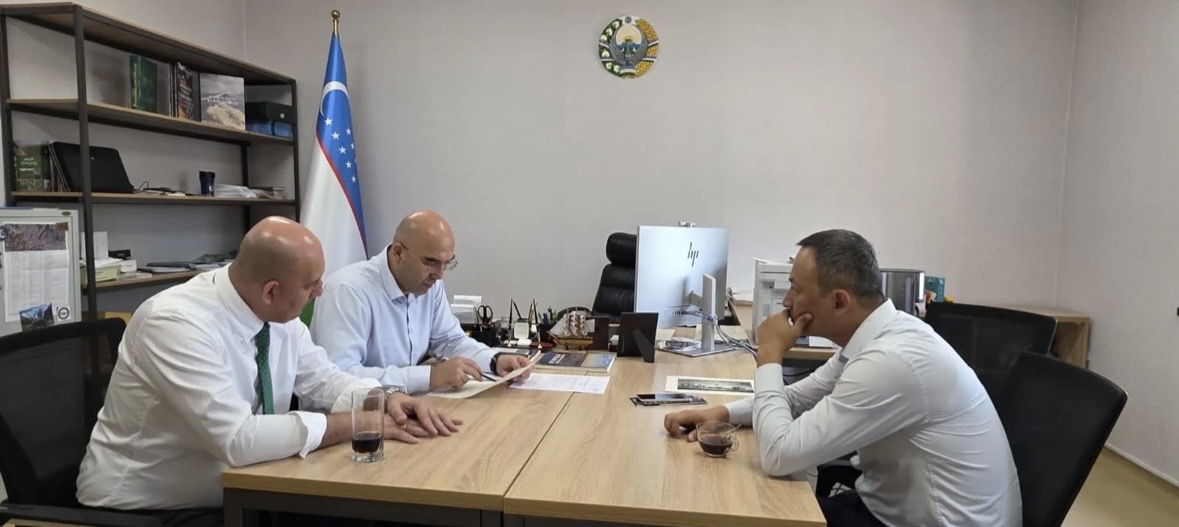
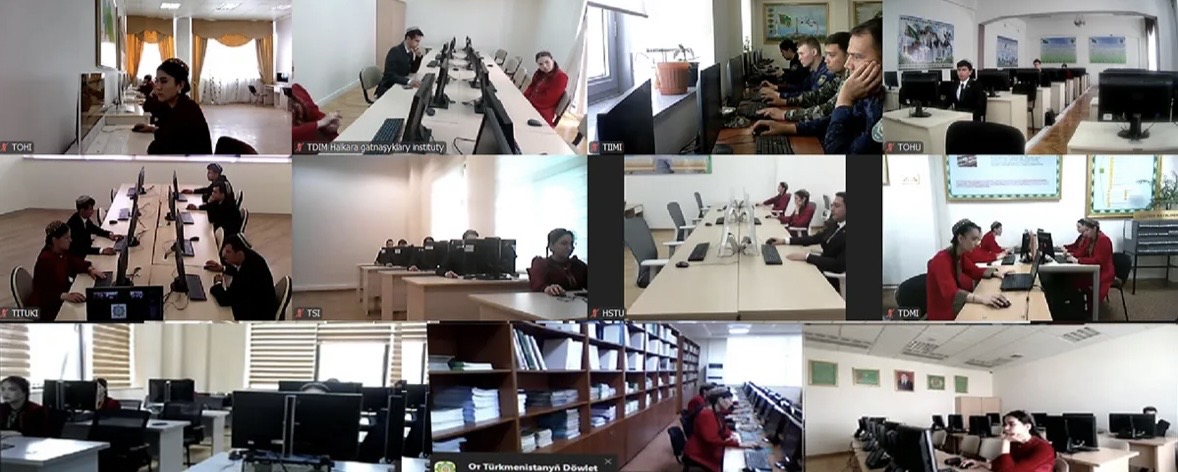

Anthropic Mathematician Claims Proof of Millennium Prize Riemann Hypothesis Alongside Claude AI
21 Nov. 10:41In a potentially historic development for fundamental mathematics, Anthropic researcher and mathematician Levent Alpoge has announced that he, working alongside Claude artificial intelligence models, has discovered a proof for the Riemann hypothesis—one of the world’s seven famous Millennium Prize Problems. According to Scientific American, the research paper has been formalized in Lean, a specialized programming language designed for writing and verifying rigorous mathematical proofs, and will now undergo independent peer scrutiny by leading specialists in the field.
Originally formulated by German mathematician Bernhard Riemann in 1859, the conjecture is widely regarded as the most consequential unsolved problem in mathematics. Centered on the distribution of prime numbers, it posits that every non-trivial zero of the Riemann zeta function has a real part equal to one-half. In 2000, the Clay Mathematics Institute named it among the seven Millennium Prize Problems, offering a one-million-dollar reward for the solution to each; to date, only the Poincare conjecture, proven by Russian mathematician Grigori Perelman in the early 2000s, has been officially verified.
Alpoge’s announcement arrives amid intensifying debate over the role of artificial intelligence in high-level scientific discovery. Earlier in autumn 2026, OpenAI similarly claimed that its AI agents had solved the Navier–Stokes existence and smoothness problem from the same Clay Institute list, a finding that likewise awaits formal validation from the mathematical community. Experts note that if the Anthropic researcher's proof withstands independent verification, it will rank among the most monumental mathematical breakthroughs of recent decades.
Blitz