
Playlist
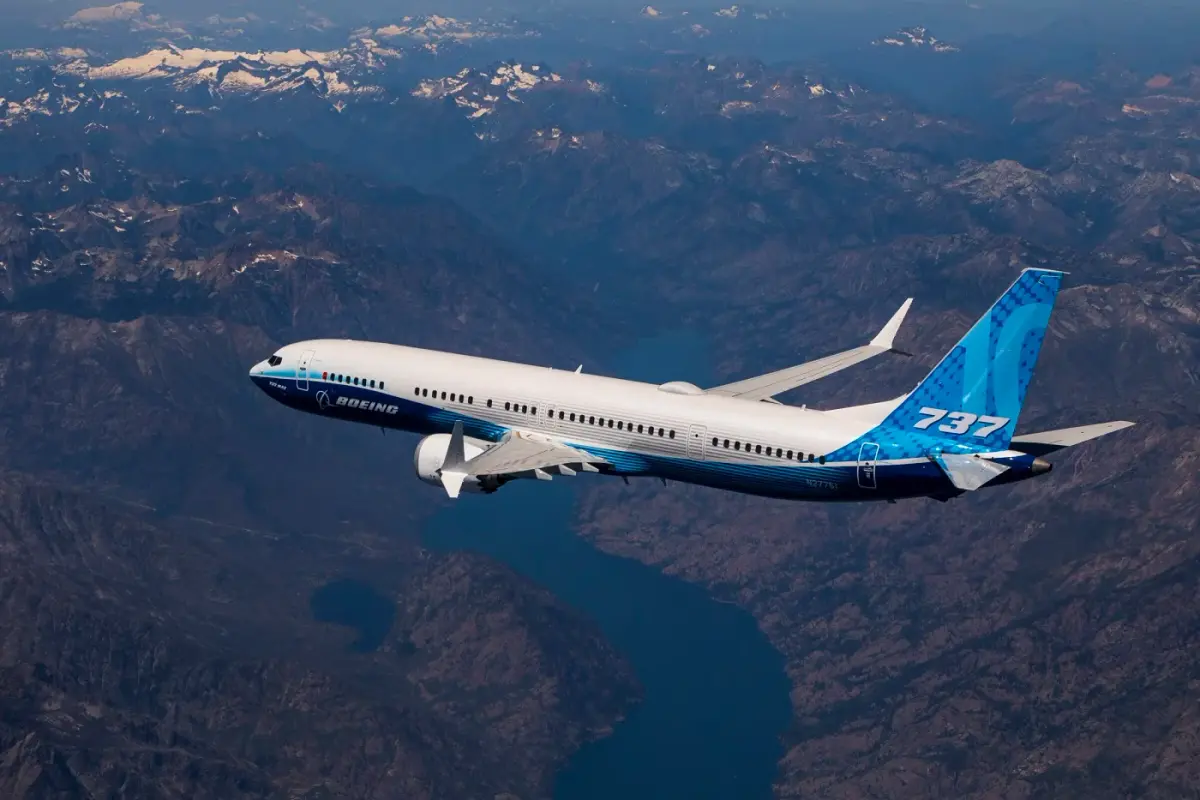
Boeing 737 MAX 10 Receives Official Regulatory Approval for Commercial Entry
22 Oct. 07:35The U.S. Federal Aviation Administration (FAA) has granted final certification approval for the Boeing 737 MAX 10, the largest variant in the 737 MAX aircraft family. The regulatory milestone authorizes the American aerospace manufacturer to commence customer deliveries, bringing an end to prolonged certification delays and offering a path toward financial recovery after years of operational and regulatory challenges. The MAX 10 model can seat up to 230 passengers, expanding capacity beyond the MAX 9 (195 seats) and MAX 7 (160 seats) variants.
According to data from aviation analytics firm IBA, global airlines have placed over 1,550 firm orders for the MAX 10, representing approximately 31% of Boeing’s total backlog for the 737 product line. Key customers awaiting fleet integration include United Airlines, Alaska Airlines, Ryanair, Delta Air Lines, and American Airlines. A number of already manufactured airframes are currently prepared for immediate transfer to commercial operators.
The commercial entry of the MAX 10 holds strategic importance for Boeing as it seeks to reclaim market share in the single-aisle aircraft segment against European competitor Airbus. Previous delays in the MAX 10 program allowed the Airbus A321neo to establish dominance in the narrow-body market, while China's COMAC C919 continues to lag behind both Western manufacturers. Having pursued certification since the early 2020s, Boeing aims to utilize the MAX 10 to strengthen its competitive positioning worldwide.


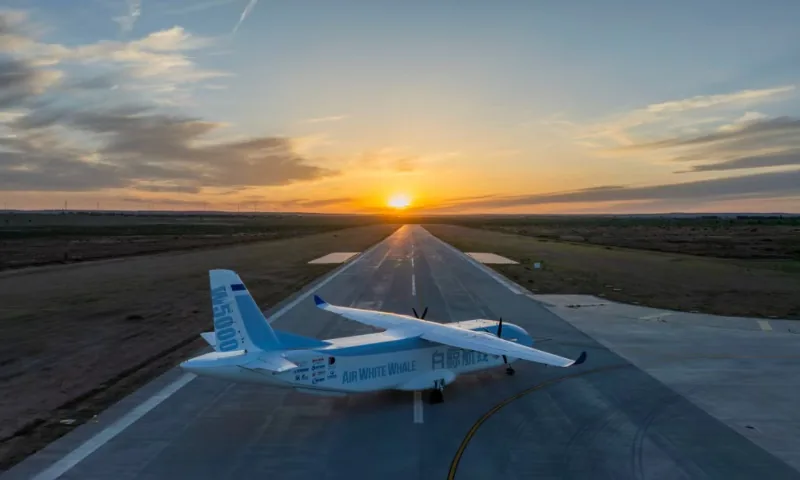
World’s Largest Unmanned Cargo Aircraft Completes Maiden Flight in China
17 Nov. 16:55The Chinese-developed W5000, billed by its creators at Air White Whale as the world’s largest unmanned cargo plane, has successfully completed its maiden test flight in Inner Mongolia. Boasting a 65-cubic-meter cargo hold, the aircraft is engineered to carry payloads of up to five tons across distances reaching 2,600 kilometers.
During the trial, the aircraft lifted off after a roughly 600-meter runway roll, climbed to an altitude of 2,000 meters, and remained airborne for about 30 minutes before making a smooth landing. Operating entirely without onboard pilots, the W5000 relies on autonomous flight controls monitored by ground-based specialists, who verified the seamless integration of its propulsion, avionics, and data-link systems.
Powered by a domestically produced turboprop engine, the airframe consists of nearly 65% carbon-fiber composite materials. This lightweight structural design reduces overall empty weight while maximizing the share of takeoff mass dedicated to freight.
Developers envision deploying the W5000 for regional logistics, temperature-controlled deliveries, and emergency relief operations. Because the design eliminates cockpit equipment and flight crew expenses while cutting fuel burn, the manufacturer estimates per-ton-kilometer shipping costs will be over 60% lower than those of comparable manned cargo aircraft.
Blitz