
Playlist
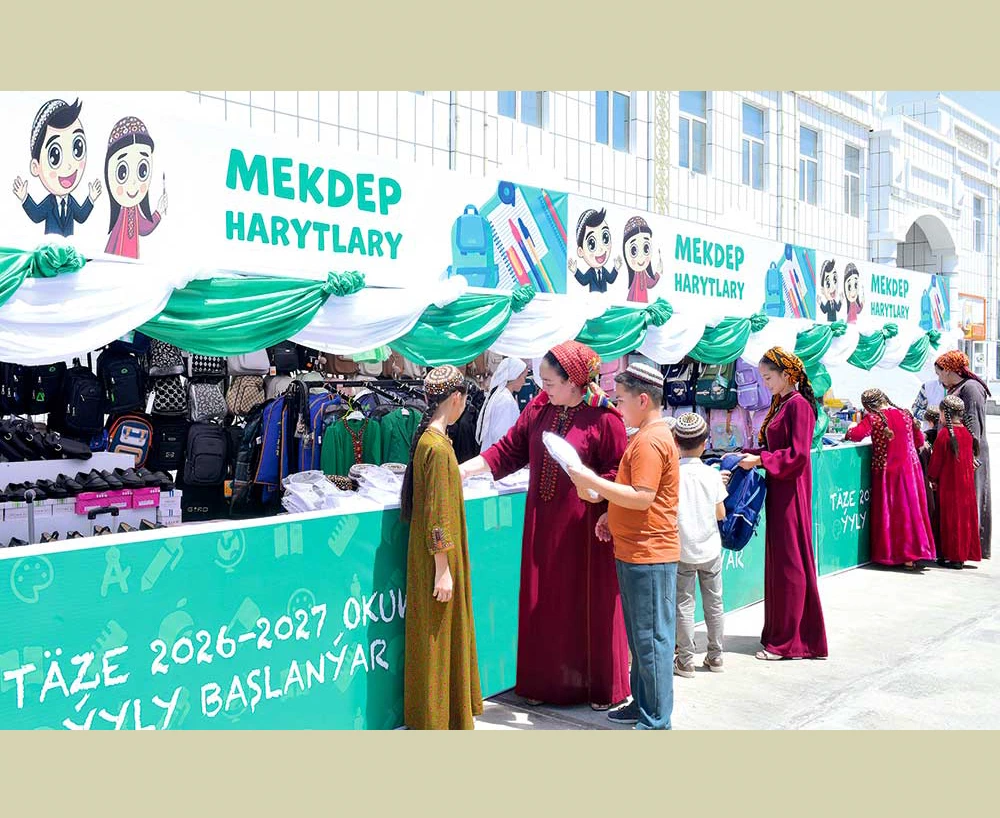
In preparation for the upcoming 2026–2027 academic year, specialized school markets and mobile retail outlets have officially opened across Turkmenistan. As reported by the Turkmenistan newspaper, temporary retail points have been established adjacent to major public markets and shopping centers, providing students and teachers with essential academic supplies.
The establishment of these seasonal outlets follows directives issued by the President of Turkmenistan during a Cabinet of Ministers meeting on July 24. Approximately 60 mobile retail stations are scheduled to operate across the capital, providing daily service from early morning until evening. Major shopping zones have been set up at prominent locations, including the Altyn Asyr, Teke, and Gulistan markets.
The majority of the items on offer are locally produced. High demand is reported for school uniforms and athletic wear manufactured by the Ministry of Textile Industry of Turkmenistan, including traditional embroidered dresses, pinafores, and green blazers for girls, as well as tailored suits and white shirts for boys. The inventory also includes a broad range of backpacks, footwear, and stationery items such as notebooks, diaries, and drawing albums. The product designs feature imagery reflecting the country's 35th anniversary of independence and national symbols.
Also read



Number of New International Students in the US Drops by 15%
17 Nov. 17:00During the fall 2026 semester, the number of new international students enrolled in American educational institutions declined by 15% compared to the same period last year, according to CNBC. Over the entirety of the 2025–2026 academic year, the total population of international students in the United States dropped by more than 17%, with the steepest declines observed among students hailing from India and China.
Colleges surveyed by the publication attribute this downward trend to tighter US immigration policies and recent modifications governing student visa validity periods.
Data from NAFSA: Association of International Educators shows that international students contributed nearly $40 billion to the US economy during the 2025–2026 academic year. The drop in enrollment is projected to trigger financial losses of approximately $2.4 billion this academic year.
Fitch Ratings notes that shifts in visa regulations will primarily impact the financial stability of American colleges and universities. International enrollees typically pay full tuition or receive far less financial aid than domestic students. The consequences could prove especially severe for institutions heavily reliant on large master's programs and STEM (science, technology, engineering, and math) courses, which attract 57% of all international students.
Blitz