
Playlist
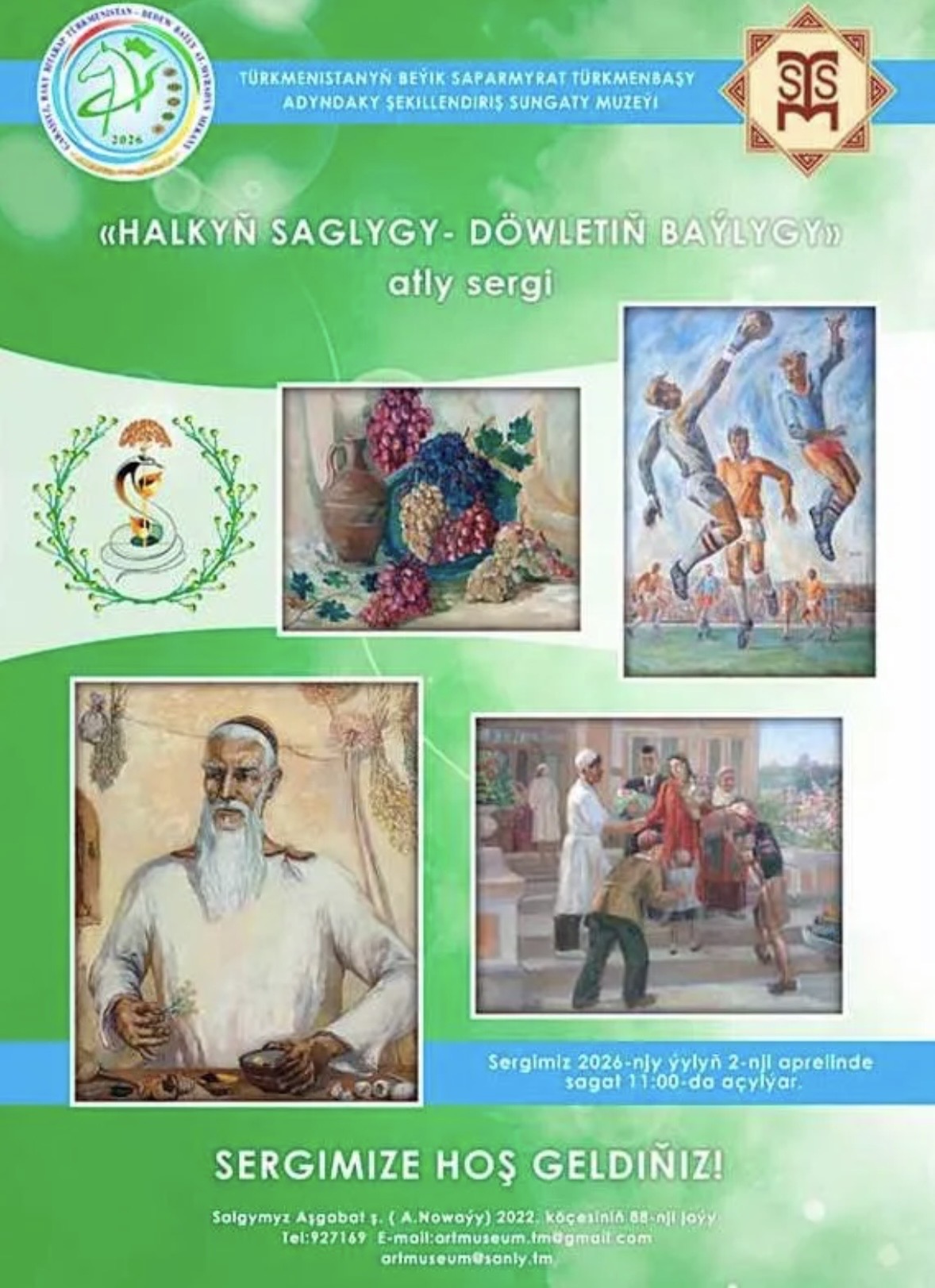
The Saparmurat Turkmenbashy the Great Museum of Fine Arts of Turkmenistan is set to unveil a special art exhibition titled "Health of the People – Wealth of the State." The grand opening ceremony is scheduled for April 2nd at 11:00 AM, welcoming art enthusiasts and the general public. This event serves as a creative tribute to the national priority of fostering a healthy society through artistic expression.
The exhibition is timed to coincide with World Health Day, observed globally on April 7th. This year’s international theme, "Together Towards Health. Together with Science," is reflected in the curated collection, bridging the gap between scientific advancement and cultural heritage. The displays aim to underscore the vital role of physical well-being and scientific research in the sustainable development of modern society.
The collection will feature a diverse array of artworks, including paintings, sculptures, and installations by prominent Turkmen artists. These pieces focus on themes such as sports, the vitality of nature, and the human spirit's resilience. Located at 88 Alisher Navoi Street in Ashgabat, the museum provides a prestigious setting for visitors to explore how local talent interprets the global pursuit of health and wellness.
For individuals seeking further details regarding the event or the museum’s current schedule, inquiries can be made via telephone at (+99312) 92-71-69. This exhibition not only celebrates an important international date but also reinforces the cultural commitment to promoting a wholesome lifestyle among the younger generation and the wider community.
Also read




Simple Vitamin Shows Surprising Results in Pre-Cancerous Blood Conditions, Study Finds
Today in 02:02Daily high-dose supplementation of vitamin C can significantly reduce mortality risks and help prevent severe medical complications in patients with pre-cancerous blood conditions. Researchers from the Van Andel Institute in the United States and Copenhagen University Hospital in Denmark reached this conclusion following a comprehensive three-year follow-up study. The international "EVITA" trial involved volunteers who were administered 1,000 mg of vitamin C daily over the course of a year, while a control group received a placebo.
Although initial hypotheses suggested vitamin C might directly inhibit abnormal cell proliferation, researchers found its primary benefit lay in strengthening the body, reducing systemic inflammation, and lowering rates of anemia, pneumonia, and internal bleeding. Over the three-year observation period, the vitamin C group exhibited a significantly higher survival rate compared to the placebo group. While experts emphasize that these findings remain preliminary and require larger clinical trials before reshaping formal medical treatment protocols, vitamin C continues to show promising potential in supportive patient care.
Blitz