
Playlist
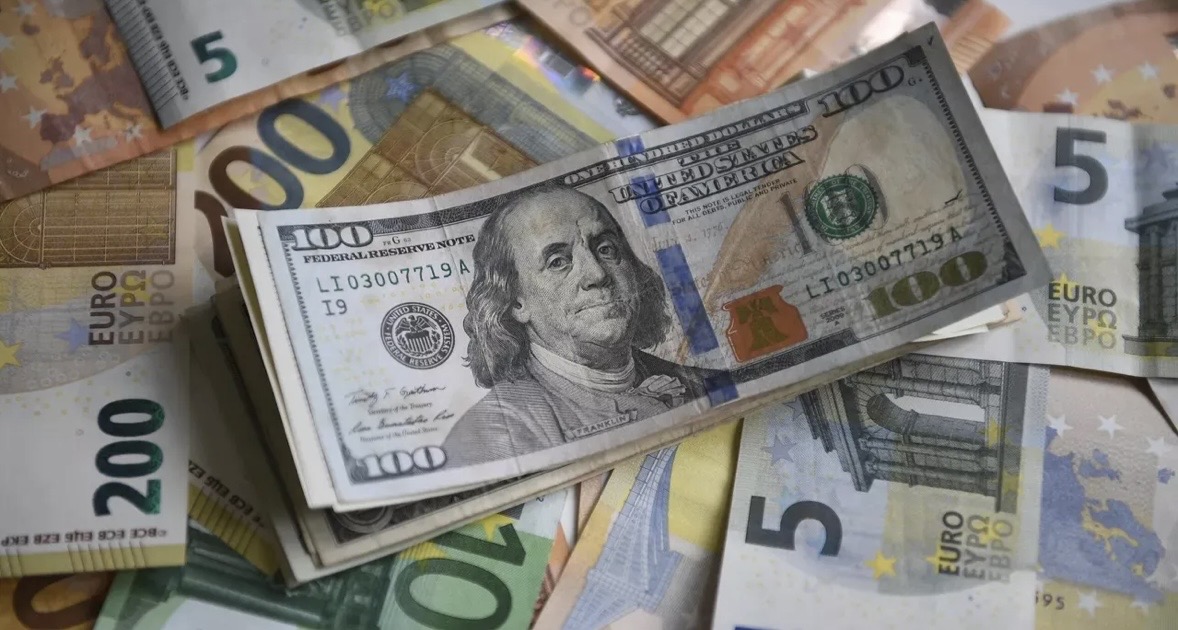
The Colombian peso has demonstrated the highest growth trajectory within global financial markets, emerging as the world's most appreciated currency against the US dollar over the first six months of the current year. According to analysis published by the "ria.ru" media agency using real-time stock exchange metrics, the Latin American currency expanded its net valuation by 9,02%. This macroeconomic indicator securely positioned Colombia at the apex of global currency performance tracking.
The elite list of the top five global currencies displaying the strongest resistance and expansion against the US dollar also features the Israeli shekel, which appreciated by 6,59%, and the Brazilian real, which grew by 5,91%. The fourth and fifth rankings within this high-performing group were claimed by the Hungarian forint with a 5,55% expansion and the Kazakhstani tenge, which gained 4,22%. Concurrently, the Russian ruble joined the positive bracket, strengthening by 0,61% since the start of the year.
Conversely, global financial monitors also compiled a definitive index of national currencies that suffered the most extensive degradation and devaluation within the same observed timeline. The Turkish lira registered the most severe decline, forfeiting 7,91% of its net purchasing value against the dollar. The Sri Lankan rupee demonstrated a similarly precarious path, losing 7,81% of its value due to structural economic headwinds.
The index of the world's most vulnerable monetary assets also includes the South Korean won, which plummeted by 7,06% along its external trading lines. This downward trajectory was further mirrored by the Indonesian rupiah, which contracted by 6,67%, and the Romanian new leu, which recorded a 5,74% drop in value. Financial experts attribute the devaluation of these currencies to domestic inflation rates and capital outflows from emerging economies.
Market analysts conclude that this currency volatility illustrates ongoing structural transformations within global trade corridors. The monetary policies enacted by major central banks regarding interest rates will continue to dictate international exchange movements through the second half of the annual cycle.
Also read




Ecological Shift: Golden Jackals Pro Projected to Inhabit 75% of the European Continent
Today in 06:53Once restricted mainly to the Balkans and the Black Sea coastal regions, golden jackals are rapidly expanding their footprint across Europe. According to a landmark study by an international research team published in Nature Ecology & Evolution, these adaptable predators could eventually inhabit up to 75% of the European continent—nearly a sixfold expansion from their historical range. Scientists arrived at these conclusions after monitoring nearly 9,000 sampling sites across multiple European nations.
Recent sightings and acoustic tracking confirm that jackals have established populations in the Czech Republic, the Baltic region, and even Scandinavia. The species thrives in areas with mild winters, mixed agricultural landscapes, and proximity to water sources. Regional climate warming has transformed previously uninhabitable northern areas into suitable habitats, while farming landscapes offer abundant food sources and coverage.
Biologists attribute this unprecedented expansion primarily to the historical decline of wolf populations, which naturally suppress jackal numbers and limit their movement. Smaller than wolves but slightly larger than foxes, jackals feed on small rodents, carrion, plants, and fruits. Their high ecological adaptability allows them to settle efficiently into newly colonized territories without human interference.
However, their entry into Western and Southern Europe, including countries like France and Spain, poses potential ecological consequences. Environmentalists warn that the arrival of jackals could disrupt local ecosystems and threaten endangered ground-nesting steppe birds and smaller wildlife across the Iberian Peninsula.
Blitz