
Playlist

Turkmenistan intends to extend the implementation of its cooperation roadmap with the International Labour Organization (ILO) until the end of 2026. This was announced by Deputy Chairman of the Cabinet of Ministers and Minister of Foreign Affairs of Turkmenistan, Rashid Meredov, during a government meeting.
According to the Foreign Minister, Turkmenistan continues to work closely with the ILO within the framework of multilateral conventions aimed at ensuring decent working conditions and protecting the rights of all parties in labor relations. The cooperation was carried out under the 2024–2025 roadmap and has delivered positive outcomes for Turkmenistan.
In light of these results, the Ministry of Foreign Affairs of Turkmenistan has proposed extending the roadmap until the end of 2026 and expanding its implementation by engaging government bodies and public organizations of Turkmenistan.
A key priority of the extended roadmap is strengthening the political and legal framework to prevent forced labor, including child labor, while also further improving Turkmenistan’s national labor legislation and enhancing the application of legally significant measures.
The plan also предусматривает intensified, targeted efforts by state institutions and trade unions in Turkmenistan to safeguard labor rights. To support large-scale reforms, Turkmenistan intends to establish a dedicated database for the calculation, collection, and analysis of labor rights indicators.
Regular dialogue between the ILO and the Government of Turkmenistan will continue, alongside systematic bilateral meetings involving the Ministry of Foreign Affairs of Turkmenistan, the Ministry of Labor and Social Protection, relevant agencies, and ILO experts to discuss preventive measures against child labor.
Also read
Solar Mini-Grids to Power Remote Communities Across Turkmenistan Under New Four-Million-Dollar UNDP Initiative
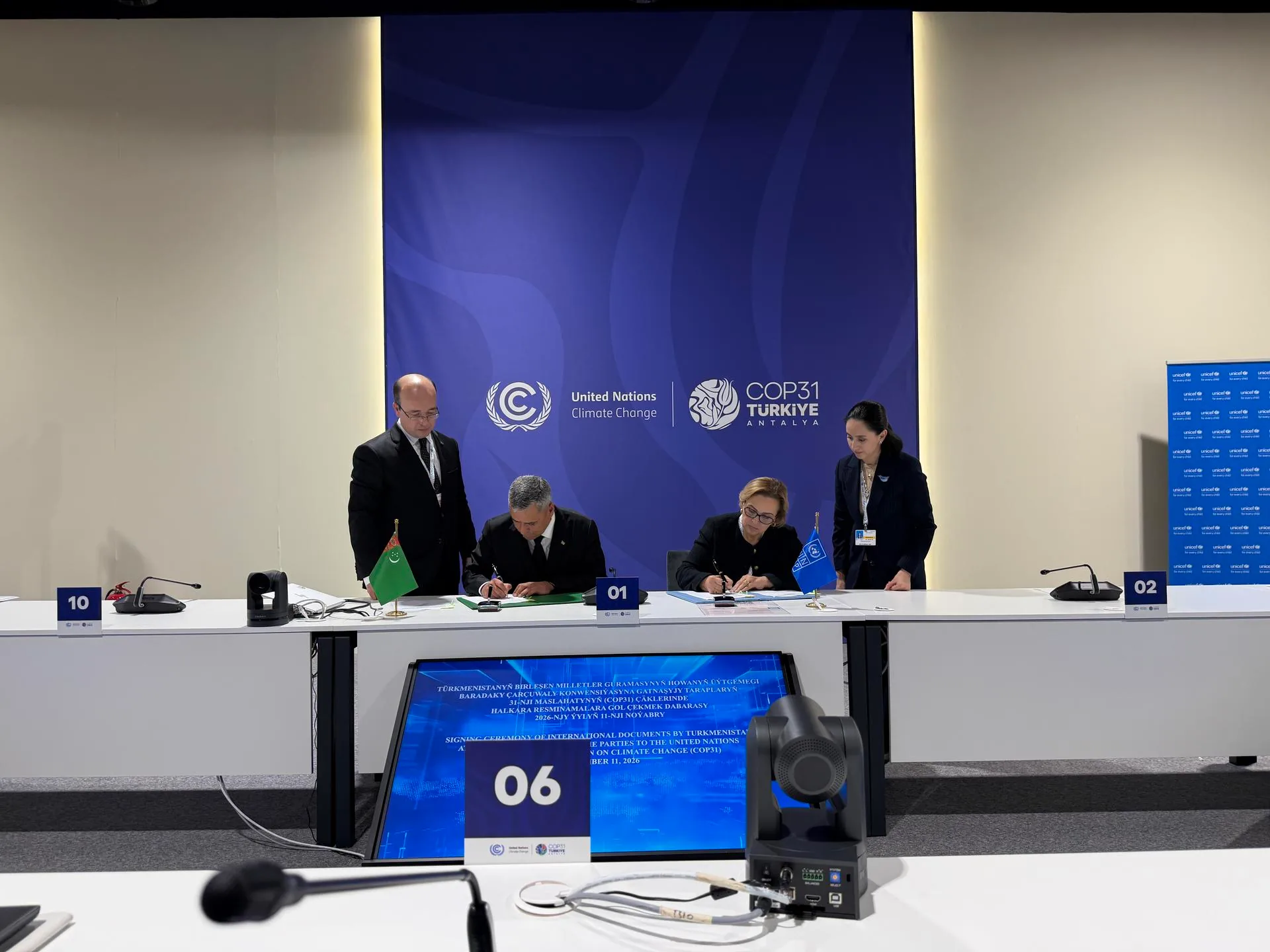
13 Nov. 14:30Following the landmark climate agreements signed on the sidelines of the COP31 conference in Antalya, the United Nations Development Programme (UNDP) has unveiled comprehensive details regarding its upcoming clean energy partnership with the Government of Turkmenistan. Backed by a Global Environment Facility (GEF) grant exceeding 4.17 million US dollars, the five-year project titled "Supporting Energy Transition for Remote Settlements of Turkmenistan" will be executed by the United Nations Office for Project Services (UNOPS) in close coordination with Turkmenistan's Ministry of Environmental Protection and Ministry of Energy.
A central pillar of the initiative involves installing and commissioning up to ten pilot solar mini-power plants with a combined capacity of up to 2 MW in isolated communities that currently rely heavily on diesel generators for electricity. These demonstration facilities will showcase the viability of solar power across Turkmenistan's remote regions and establish a blueprint for broader clean energy adoption. Building upon the operational experience gained from these initial sites, experts will conduct feasibility assessments and prepare tailored technical solutions for potentially deploying solar energy systems in an additional 120 remote settlements.
Beyond physical infrastructure, the project focuses on strengthening the regulatory and institutional framework for renewable energy, training local specialists, and expanding domestic technical expertise. UNDP Resident Representative in Turkmenistan Narine Sahakyan noted that expanding access to reliable, clean electricity significantly enhances community resilience and human well-being—particularly for women and vulnerable groups—by translating national ambitions into tangible investments. The program directly supports Turkmenistan's National Strategy for the Development of Renewable Energy through 2030, advancing the country's commitments under the Paris Agreement and the United Nations Sustainable Development Goals.
Also read

Blitz