
Playlist
The Earliest Evidence of Bow Use Outside Africa Found in Uzbekistan
19 Aug. 13:05An international research group has established that ancient people in Uzbekistan began using bows and arrows approximately 80,000 years ago. This is one of the earliest pieces of evidence for the use of such weapons outside Africa, reports TASS, citing the press service of the Institute of Archaeology and Ethnography (IAET) of the Siberian Branch of the Russian Academy of Sciences.
"While in Africa remote hunting was known to modern humans already in the Middle Paleolithic (70-80 thousand years ago), its emergence in Eurasia has traditionally been associated only with the Late Paleolithic, when technology reached its peak. The findings that shift this understanding were made at the stone age site of Obi-Rahmat in Uzbekistan, dating back to around 80,000 years ago," the institute's statement reads.
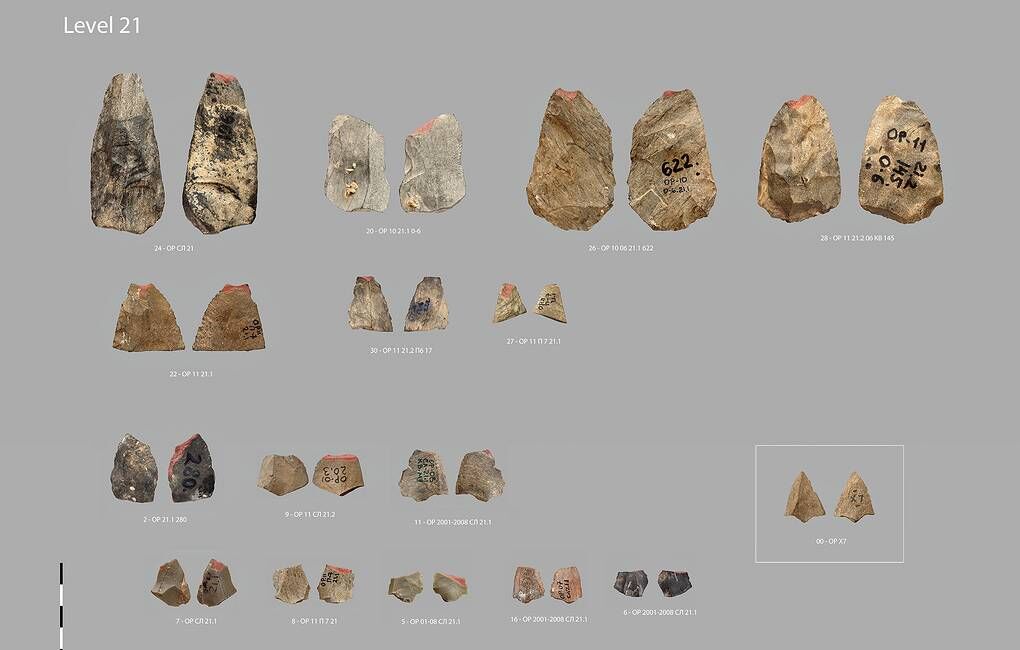
The Obi-Rahmat cave is a multilayered hunting settlement with cultural layers reaching 10 meters in depth, covering a period from 40,000 to 80,000 years ago. In the lower layers, small triangular stone tools up to 3 cm in size were found. Their investigation using the method of traceology helped determine their purpose.
Artifacts showed wear patterns characteristic of projectile tools. Their shape and presumed sizes of the shafts indicate their use as arrowheads. The institute noted that such findings significantly alter the timeline for the emergence of bow hunting outside of Africa.
"The discovery is particularly valuable because remains of people with a mosaic set of traits—combining features of both Neanderthals and early modern humans—were found in the cave. This makes the discovery crucial for understanding how and by whom complex hunting technologies were mastered in the deep past," the institute emphasized.
Also read




Number of New International Students in the US Drops by 15%
17 Nov. 17:00During the fall 2026 semester, the number of new international students enrolled in American educational institutions declined by 15% compared to the same period last year, according to CNBC. Over the entirety of the 2025–2026 academic year, the total population of international students in the United States dropped by more than 17%, with the steepest declines observed among students hailing from India and China.
Colleges surveyed by the publication attribute this downward trend to tighter US immigration policies and recent modifications governing student visa validity periods.
Data from NAFSA: Association of International Educators shows that international students contributed nearly $40 billion to the US economy during the 2025–2026 academic year. The drop in enrollment is projected to trigger financial losses of approximately $2.4 billion this academic year.
Fitch Ratings notes that shifts in visa regulations will primarily impact the financial stability of American colleges and universities. International enrollees typically pay full tuition or receive far less financial aid than domestic students. The consequences could prove especially severe for institutions heavily reliant on large master's programs and STEM (science, technology, engineering, and math) courses, which attract 57% of all international students.
Blitz