
Playlist
Scientific Breakthrough: Chinese Researchers Discover Plasticity in Diamonds at Nanoscale
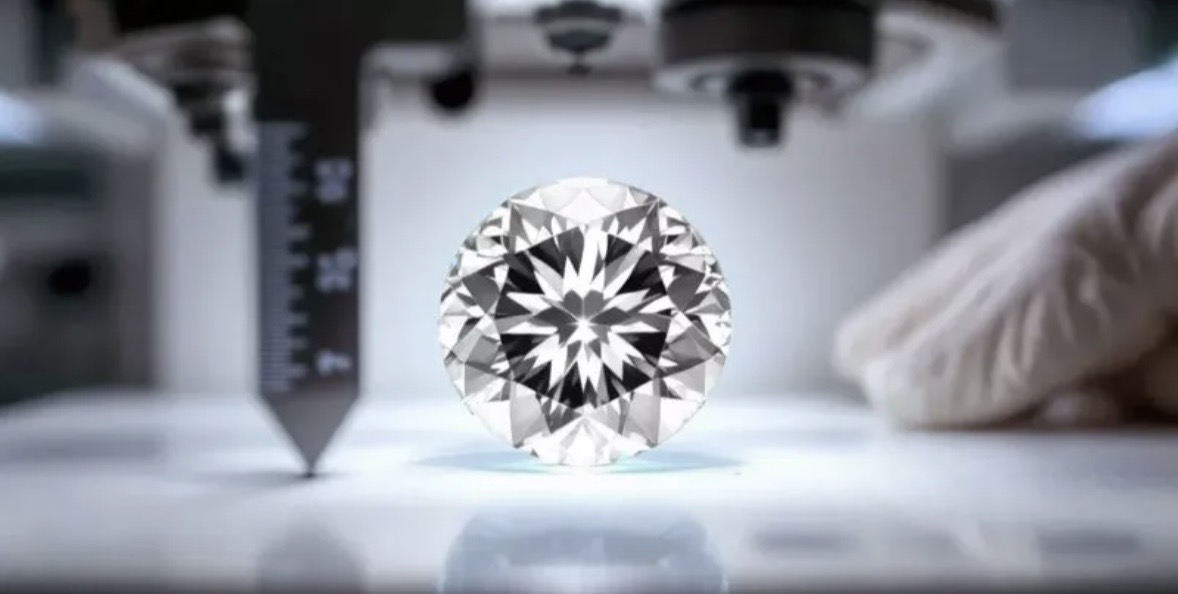
24 Apr. 05:27Scientists at Zhengzhou University in China have identified a unique phenomenon where diamonds, traditionally known for their extreme hardness, exhibit significant flexibility. By scaling the diamond structures down to the nanometer level, the research team observed a transition from rigid to "soft" mechanical behavior. This finding challenges long-standing principles in mineralogy and materials science, suggesting that the most durable natural substance can be engineered for elasticity.
The experiment involved placing individual nanodiamonds, ranging from 4 to 13 nanometers in diameter, between two diamond indenters inside a transmission electron microscope. Specialized sensors measured the stress-strain response of each nanocrystal, while high-resolution imaging captured the atomic displacement in real-time. The data revealed that while 13-nanometer diamonds remained relatively rigid, those reduced to 8 nanometers showed a 30% reduction in hardness, demonstrating a clear size-dependent mechanical softening.
The study clarified that this increased flexibility originates from the interaction of sub-surface atomic layers rather than just surface-level modifications. At these extreme dimensions, the diamond's internal structure allows for reversible deformation that is impossible in larger crystals. Future research is expected to focus on how varying temperatures and specific processing techniques can further manipulate the pliability of these nanostructures for industrial use.
The potential applications for these "flexible" diamonds are vast, particularly in the fields of quantum computing and advanced photonics. Their ability to withstand structural deformation while maintaining the superior thermal properties of diamond makes them ideal for next-generation micro-electromechanical systems (MEMS). This discovery marks a pivotal step toward integrating diamond-based components into flexible electronic devices and resilient high-tech sensors.
Also read



A rye-wheat loaf preserved in a freezer for 36 years has been put on public display as part of the permanent exhibition at the Deutschlandmuseum in Berlin. Dubbed "The Last Loaf of the GDR," it was originally purchased on June 26, 1990, by student Michael Hagedorn, who bought an extra loaf fearing potential food shortages amidst the economic unification of East and West Germany.
The museum's director, Robert Rückel, described the unusual artifact as a unique poignant symbol of everyday human decisions during times of monumental geopolitical change. To maintain its preserved state, the museum installed a custom refrigeration unit where the historical loaf remains permanently frozen for visitors to view.
Blitz