
Playlist

Presidents of Russia and Kazakhstan Enact Comprehensive Declaration Outlining Seven Principles of Neighborliness
29 May. 07:46The President of the Russian Federation, Vladimir Putin, and the President of the Republic of Kazakhstan, Kassym-Jomart Tokayev, formally ratified a strategic bilateral accord during executive deliberations. The historic document, titled "On the Seven Foundations of Friendship and Good-Neighborliness Between the Peoples of Russia and Kazakhstan," establishes a modernized operational framework for bilateral ties. The signing ceremony was corroborated by "INTERFAX.RU," drawing from verified governmental press releases issued at the summit.
According to a press brief delivered by Yuri Ushakov, Assistant to the Russian Head of State, the document codifies critical state goals aimed at deepening mutual integration across institutional sectors. The Kremlin representative highlighted that the foundational metrics include the preservation of shared historical legacies evaluated through a lens of bilateral respect, alongside coordinated efforts to advance Eurasian economic integration. Furthermore, both sovereign nations pledged to expand the structural dimensions of security and regional dialogue throughout Central Asia.
The comprehensive treaty also designates significant focus toward economic expansion and the preservation of shared cultural traditions, explicitly highlighting linguistic and heritage diversity as vital community assets. Moving forward, both administrations plan to expand academic exchanges, facilitate broader pathways for youth development, and co-sponsor international athletic initiatives. These socio-cultural frameworks are designed to fortify ties between the respective civilian populations, creating a sustainable foundation for long-term civilian diplomacy.
The seventh pillar of the treaty, as explicitly stated by the presidential administration, codifies a unified strategic vision directed toward a shared geopolitical future. By aligning their foreign policy projections, Moscow and Astana aim to build a highly coordinated, multi-layered partnership capable of neutralising modern transnational threats. This newly executed declaration serves as a long-term administrative roadmap, ensuring that future legislative and corporate programs remain aligned with the primary concepts of regional stability and economic co-reliance.
Also read



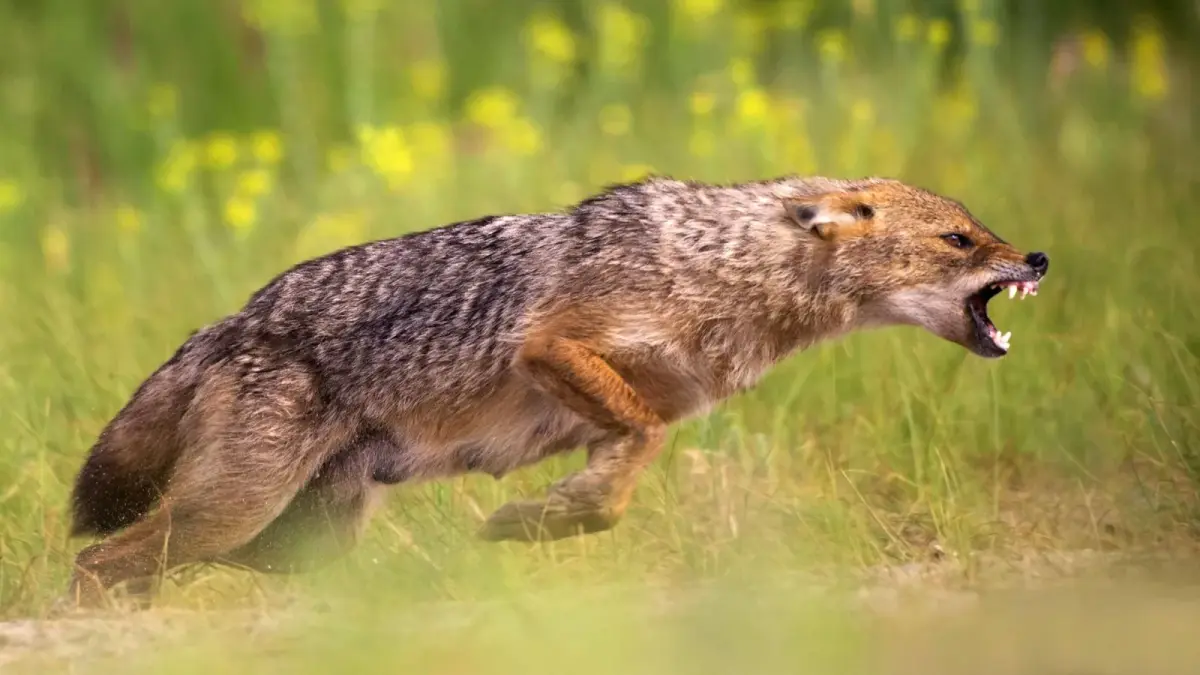
Ecological Shift: Golden Jackals Pro Projected to Inhabit 75% of the European Continent
Today in 06:53Once restricted mainly to the Balkans and the Black Sea coastal regions, golden jackals are rapidly expanding their footprint across Europe. According to a landmark study by an international research team published in Nature Ecology & Evolution, these adaptable predators could eventually inhabit up to 75% of the European continent—nearly a sixfold expansion from their historical range. Scientists arrived at these conclusions after monitoring nearly 9,000 sampling sites across multiple European nations.
Recent sightings and acoustic tracking confirm that jackals have established populations in the Czech Republic, the Baltic region, and even Scandinavia. The species thrives in areas with mild winters, mixed agricultural landscapes, and proximity to water sources. Regional climate warming has transformed previously uninhabitable northern areas into suitable habitats, while farming landscapes offer abundant food sources and coverage.
Biologists attribute this unprecedented expansion primarily to the historical decline of wolf populations, which naturally suppress jackal numbers and limit their movement. Smaller than wolves but slightly larger than foxes, jackals feed on small rodents, carrion, plants, and fruits. Their high ecological adaptability allows them to settle efficiently into newly colonized territories without human interference.
However, their entry into Western and Southern Europe, including countries like France and Spain, poses potential ecological consequences. Environmentalists warn that the arrival of jackals could disrupt local ecosystems and threaten endangered ground-nesting steppe birds and smaller wildlife across the Iberian Peninsula.
Blitz