
Playlist

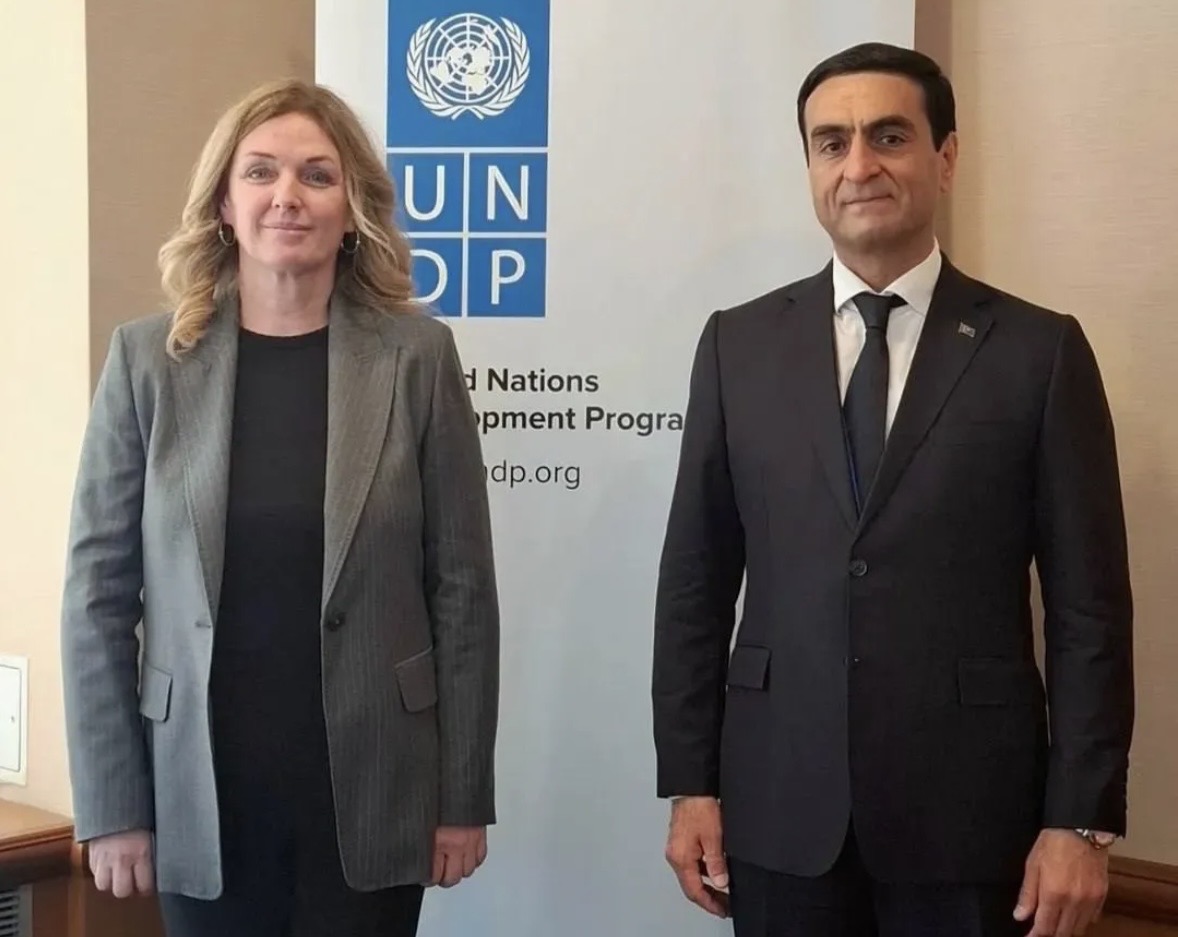
The Turkmen Ministry of Foreign Affairs hosted the inaugural consultative meeting to kickstart preparations for 2028, which has been proposed as the International Law Year. The primary focus of the session was the implementation of the 2026 action plan, a comprehensive roadmap introduced following the President’s initiative at the 80th session of the UN General Assembly. This strategic document integrates organizational, academic, and diplomatic efforts aimed at reinforcing international law as the bedrock of global peace and mutual trust.
The action plan is structured around five pillars, ranging from hosting international scientific conferences and educational workshops to fostering bilateral legal cooperation and supporting youth-led scientific research. A significant emphasis is placed on highlighting the political and legal significance of Turkmenistan's permanent neutrality, showcasing it as a vital mechanism for maintaining regional stability and fostering constructive international partnerships.
To ensure widespread awareness and engagement, a dedicated digital platform will be established on the Ministry’s official website, serving as a hub for information regarding the upcoming themed year. This will be complemented by a broad communication strategy targeting both domestic and international audiences through various media channels. The meeting concluded with a commitment from all relevant government agencies to work in a synchronized manner to achieve these long-term diplomatic objectives.
Also read



Ecological Shift: Golden Jackals Pro Projected to Inhabit 75% of the European Continent
Today in 06:53Once restricted mainly to the Balkans and the Black Sea coastal regions, golden jackals are rapidly expanding their footprint across Europe. According to a landmark study by an international research team published in Nature Ecology & Evolution, these adaptable predators could eventually inhabit up to 75% of the European continent—nearly a sixfold expansion from their historical range. Scientists arrived at these conclusions after monitoring nearly 9,000 sampling sites across multiple European nations.
Recent sightings and acoustic tracking confirm that jackals have established populations in the Czech Republic, the Baltic region, and even Scandinavia. The species thrives in areas with mild winters, mixed agricultural landscapes, and proximity to water sources. Regional climate warming has transformed previously uninhabitable northern areas into suitable habitats, while farming landscapes offer abundant food sources and coverage.
Biologists attribute this unprecedented expansion primarily to the historical decline of wolf populations, which naturally suppress jackal numbers and limit their movement. Smaller than wolves but slightly larger than foxes, jackals feed on small rodents, carrion, plants, and fruits. Their high ecological adaptability allows them to settle efficiently into newly colonized territories without human interference.
However, their entry into Western and Southern Europe, including countries like France and Spain, poses potential ecological consequences. Environmentalists warn that the arrival of jackals could disrupt local ecosystems and threaten endangered ground-nesting steppe birds and smaller wildlife across the Iberian Peninsula.
Also read




Blitz