
Playlist
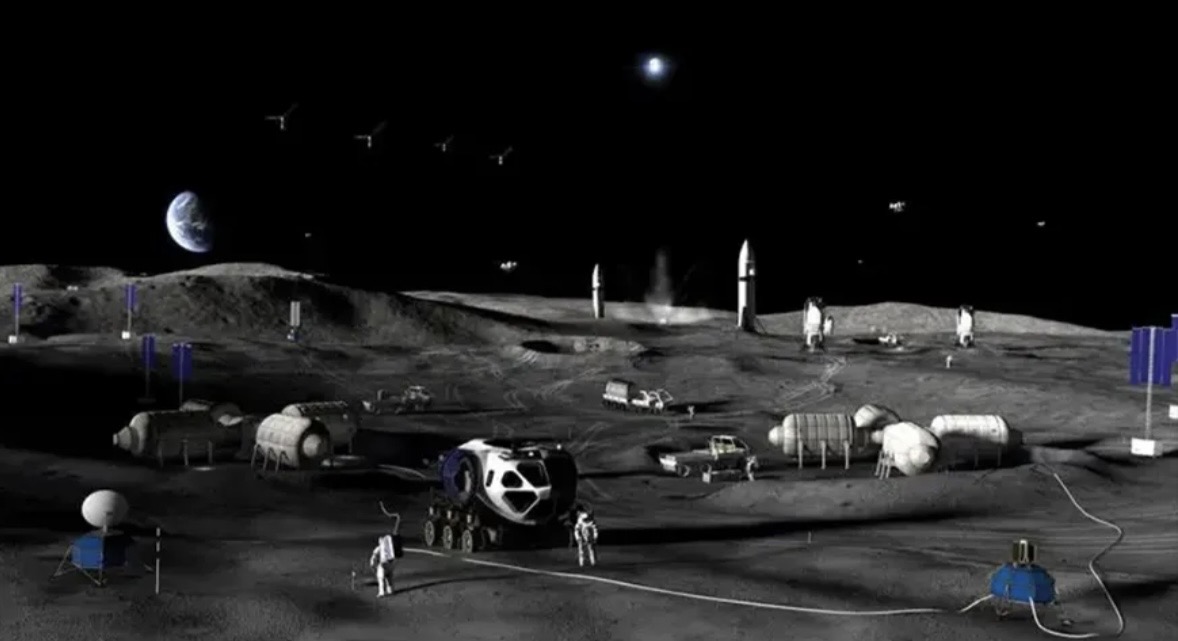
The National Aeronautics and Space Administration (NASA) is preparing to allocate approximately $20 billion for the construction of a sustainable base on the Moon. This financial commitment, reported by major news outlets, marks a pivotal shift in lunar exploration strategy. The funding is intended to transform the Moon from a destination for brief visits into a long-term hub for human scientific research and technological development.
Under the framework of the "Artemis" program, the project aims to establish the necessary infrastructure for astronauts to reside and work on the lunar surface for extended periods. Details of the initiative have been shared with international partners and strategic contractors in Washington, signaling a collaborative approach to deep-space exploration. The base is envisioned as a critical stepping stone for future crewed missions to Mars.
A significant milestone in this roadmap is the upcoming "Artemis II" mission, which will be the first crewed flight to the lunar vicinity in over five decades. A team of four astronauts will orbit the Earth's natural satellite to validate the spacecraft's systems and landing technologies. This mission is vital for ensuring the safety and reliability of the hardware required for the eventual construction of the lunar habitat.
The development of a permanent lunar station necessitates breakthroughs in robotics, life-support systems, and resource utilization. The $20 billion investment underscores the high priority placed on securing a strategic foothold in space. By establishing a functional base, NASA and its global partners aim to unlock new scientific discoveries and establish a sustainable model for human presence beyond Earth’s atmosphere.
Also read




On-the-Go Power: Japanese Engineers Develop Wireless In-Road Charging for Electric Vehicles
10 Oct. 08:10In a major leap for electric mobility, Honda R&D, alongside Taisei Corporation and Taisei Rotec, has unveiled an innovative dynamic wireless charging system that charges electric vehicles as they drive. By embedding compact energy-transmitting modules directly into the road surface, the system transfers power via a magnetic field to receivers mounted underneath moving vehicles. Designed to withstand heavy commercial transport up to 20 tons, real-world road testing is scheduled to begin in Japan in April 2027.
The technology eliminates the need for full road reconstruction, as modules can be integrated directly into milled asphalt layers. Aimed at boosting charging power up to 150 kW in future iterations, this infrastructure solution promise to significantly reduce grid pressure on traditional charging stations, particularly for logistics and commercial fleets.
Blitz