
Playlist

A devastating fire swept through a coastal village in the state of Sabah on Borneo island, Malaysia, leaving thousands of residents homeless. According to Reuters, citing local fire department officials, the blaze consumed almost every structure in the area, forcing a massive evacuation. The scale of the destruction has left entire families without shelter as the fire reduced their homes to ashes.
The head of the Sandakan Fire and Rescue Department reported that while specialists were dispatched immediately, the inferno spread with uncontrollable speed. The combination of high winds and the high density of the housing—where buildings are constructed in close proximity—allowed the flames to engulf the majority of the village before responders could arrive.
Initial reports indicate that approximately 9,000 people have been affected by the disaster. Fortunately, despite the total loss of nearly 1,000 homes, no fatalities have been reported. State authorities are currently focusing on providing emergency aid and temporary housing for the displaced residents while an official investigation into the cause of the fire is conducted.
Also read



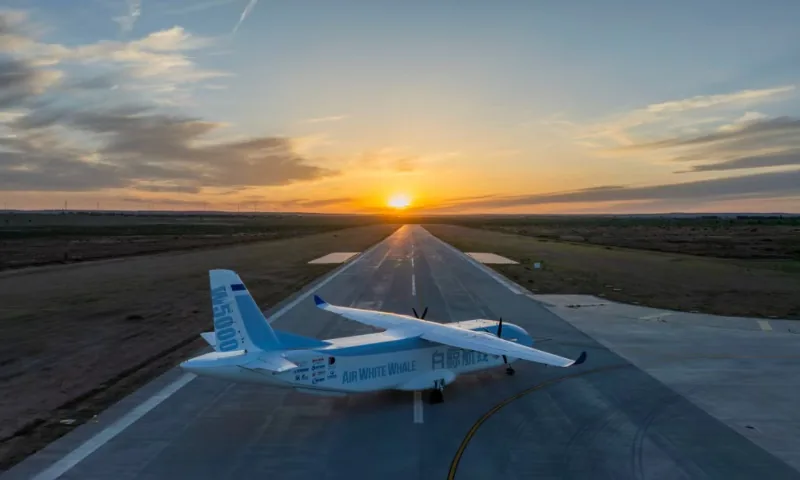
World’s Largest Unmanned Cargo Aircraft Completes Maiden Flight in China
17 Nov. 16:55The Chinese-developed W5000, billed by its creators at Air White Whale as the world’s largest unmanned cargo plane, has successfully completed its maiden test flight in Inner Mongolia. Boasting a 65-cubic-meter cargo hold, the aircraft is engineered to carry payloads of up to five tons across distances reaching 2,600 kilometers.
During the trial, the aircraft lifted off after a roughly 600-meter runway roll, climbed to an altitude of 2,000 meters, and remained airborne for about 30 minutes before making a smooth landing. Operating entirely without onboard pilots, the W5000 relies on autonomous flight controls monitored by ground-based specialists, who verified the seamless integration of its propulsion, avionics, and data-link systems.
Powered by a domestically produced turboprop engine, the airframe consists of nearly 65% carbon-fiber composite materials. This lightweight structural design reduces overall empty weight while maximizing the share of takeoff mass dedicated to freight.
Developers envision deploying the W5000 for regional logistics, temperature-controlled deliveries, and emergency relief operations. Because the design eliminates cockpit equipment and flight crew expenses while cutting fuel burn, the manufacturer estimates per-ton-kilometer shipping costs will be over 60% lower than those of comparable manned cargo aircraft.
Blitz