
Playlist
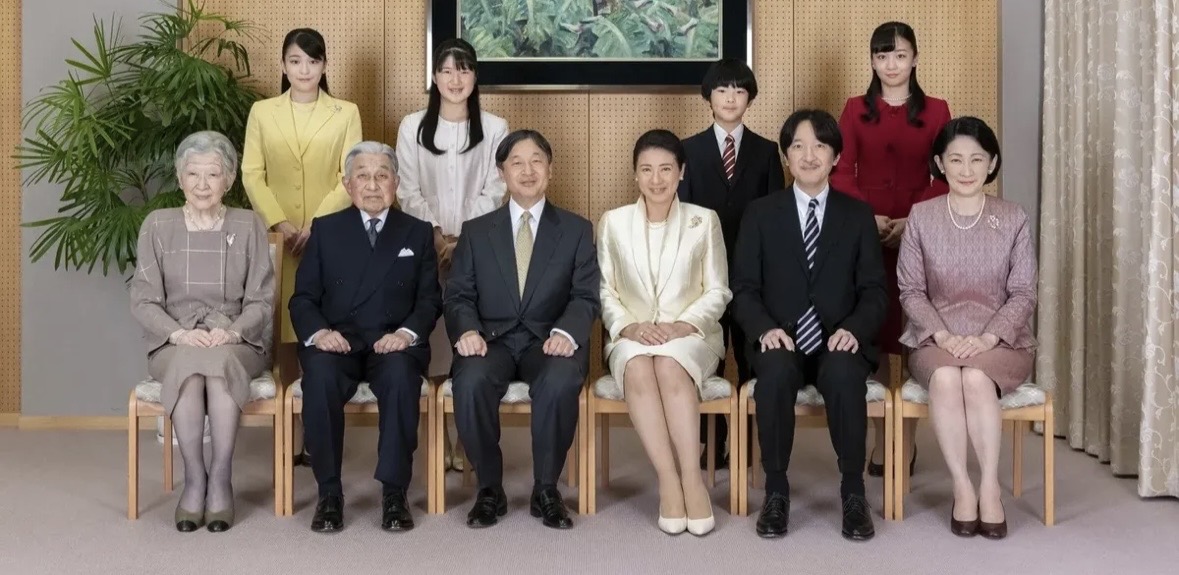
The Government of Japan has officially approved a draft bill modifying the Imperial House Law to increase the total number of members within the Imperial Family. As monitored and reported by the NHK broadcasting corporation, these legal adjustments are strategically designed to address the shrinking size of the monarchy and ensure the long-term continuity of the ancient royal institution.
According to one of the primary amendments, female members of the dynasty will henceforth retain their official status and titles within the Imperial Family even after their marriage. Under the existing traditional framework, princesses are legally required to forfeit their royal status and leave the palace immediately upon marrying a commoner who does not belong to the nobility.
Presently, the Imperial Family of Japan comprises Emperor Naruhito and 15 other royal individuals. Under current statutory guidelines, succession to the Chrysanthemum Throne is strictly limited to male descendants along the male line, leaving only three male individuals within the entire contemporary family matrix with legitimate rights to the throne.
The structural updates approved on June 30 introduce a legal mechanism allowing the adoption of male descendants from 11 former princely branches that lost their aristocratic status during the post-war reforms of 1947. This provision re-opens a pathway for male lines separated from the main royal tree during the mid-20th century to be integrated back into the core household.
The draft bill establishes rigorous criteria for any such adoptions within the dynastic structure. The legal text stipulates that any adopted individual must be under 15 years of age, unmarried, and without children of their own. Furthermore, while the adopted individuals themselves will not hold direct rights to ascend the throne, their future male descendants will fully inherit the right of imperial succession.
These cabinet-approved modifications are scheduled to be forwarded to the national parliament for definitive legislative debates and final ratification. The state administration maintains that these adjustments are essential to preserve the structural stability of the world's oldest continuous hereditary monarchy.
Also read




New Digital Boundaries: Turkey Implements Strict Social Media Regulations for Minors
10 Oct. 10:05Starting November 1, 2026, Turkey will restrict access to social media platforms for children under the age of 15 following a new regulatory decree issued by the Presidential Cyber Security Directorate and published in the Resmi Gazete. Under the new framework, users aged 15 to 18 will undergo mandatory age verification through the "e-Devlet" portal. Accounts for this age group will feature default private settings, with explicit bans on live streaming, targeted behavioral ads, and profile recommendation algorithms.
Social media networks are also required to provide parents and legal guardians with control tools to monitor usage time, location tracking, and financial transactions. Existing active accounts must complete the age verification process by March 31, 2027.
Blitz