
Playlist
European Scientists Create Autonomous AI-Driven Laboratory for Scientific Hypothesis and Experimentation
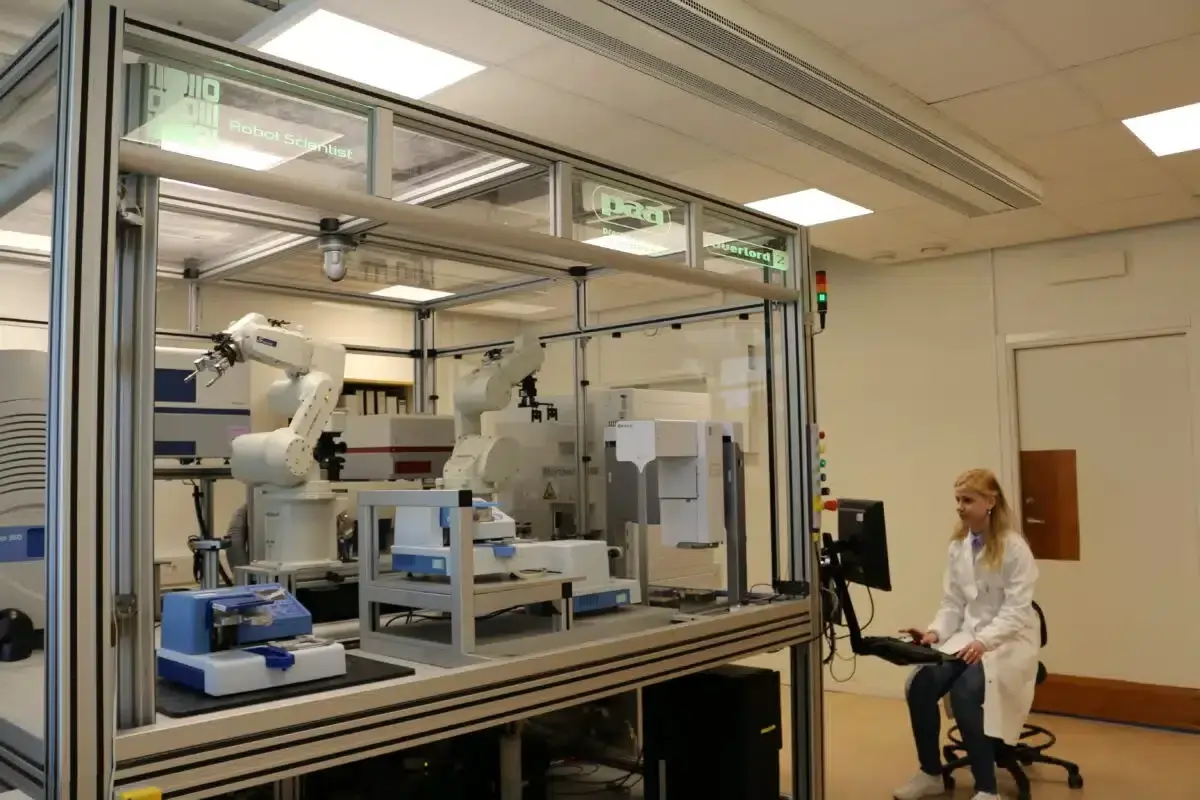
05 Oct. 08:19Researchers from Sweden and the United Kingdom have developed an AI-driven laboratory system capable of autonomously executing all stages of biological research. The platform formulates scientific hypotheses, designs experimental protocols, issues commands to automated lab equipment, and analyzes the resulting data to plan subsequent steps. During validation tests on yeast cells, the system—powered by the GPT-4o model—analyzed a dataset of 60,000 data points to generate 1,933 hypotheses, successfully confirming key predictions such as the synergistic inhibitory effect of arginine and caffeine on cell growth.
Notably, the system demonstrates adaptive learning, refining its future experimental models even when predictions prove incorrect. While human intervention is still required for manual tasks like solution preparation and sample transport, hypothesis selection and protocol design are fully automated. Researchers emphasize that AI is not replacing scientists, but rather evolving into a full partner in scientific discovery by dynamically shaping the direction of future research.



World’s Largest Unmanned Cargo Aircraft Completes Maiden Flight in China
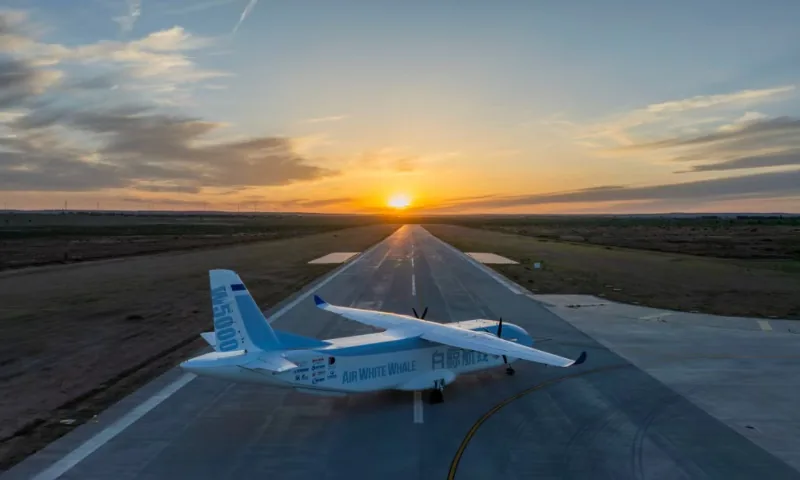
17 Nov. 16:55The Chinese-developed W5000, billed by its creators at Air White Whale as the world’s largest unmanned cargo plane, has successfully completed its maiden test flight in Inner Mongolia. Boasting a 65-cubic-meter cargo hold, the aircraft is engineered to carry payloads of up to five tons across distances reaching 2,600 kilometers.
During the trial, the aircraft lifted off after a roughly 600-meter runway roll, climbed to an altitude of 2,000 meters, and remained airborne for about 30 minutes before making a smooth landing. Operating entirely without onboard pilots, the W5000 relies on autonomous flight controls monitored by ground-based specialists, who verified the seamless integration of its propulsion, avionics, and data-link systems.
Powered by a domestically produced turboprop engine, the airframe consists of nearly 65% carbon-fiber composite materials. This lightweight structural design reduces overall empty weight while maximizing the share of takeoff mass dedicated to freight.
Developers envision deploying the W5000 for regional logistics, temperature-controlled deliveries, and emergency relief operations. Because the design eliminates cockpit equipment and flight crew expenses while cutting fuel burn, the manufacturer estimates per-ton-kilometer shipping costs will be over 60% lower than those of comparable manned cargo aircraft.
Blitz