
Playlist
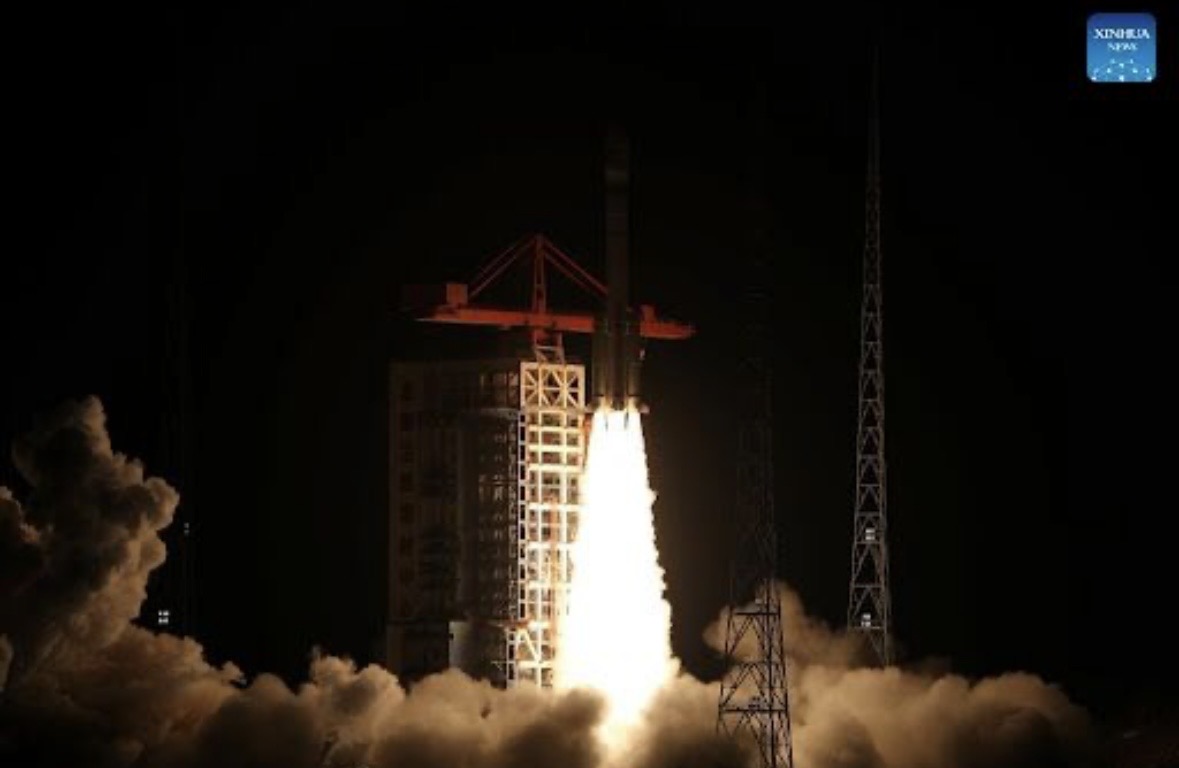
China Successfully Launches Remote Sensing Satellite via Long March-6A Rocket
17 Mar. 10:12China has achieved a new milestone in its space exploration efforts by successfully placing the Yaogan-50 02 satellite into its designated orbit. Launched from the Taiyuan Satellite Launch Center in North China, the mission utilized the Long March-6A (Changzheng-6A) carrier rocket. The satellite successfully reached its operational altitude of 500 kilometers, marking another routine yet significant advancement in the nation’s orbital capabilities.
The Yaogan series of satellites are specifically engineered for remote sensing and Earth observation tasks directed toward civil applications. These include high-precision land surveys, crop yield estimation, and comprehensive environmental monitoring. One of the critical functions of this new equipment is to provide early warnings and real-time data for disaster relief operations, enhancing the state's ability to respond to natural emergencies.
Developed by the China Academy of Space Technology under the China Aerospace Science and Technology Corporation (CASC), the satellite incorporates cutting-edge imaging and data transmission technologies. The integration of this new unit into China’s existing orbital constellation is expected to streamline scientific research and support the digital transformation of agricultural management and urban planning sectors.
The Long March-6A launch vehicle is a specialized two-stage rocket featuring a solid-fuel propulsion system. Standing 50 meters tall with a diameter of 3.35 meters, it is designed to transport up to 4.5 tons of payload to sun-synchronous orbits. This launch underscores China's commitment to building a robust aerospace infrastructure and expanding its domestic satellite network to support global environmental and scientific initiatives.
Also read



On-the-Go Power: Japanese Engineers Develop Wireless In-Road Charging for Electric Vehicles
10 Oct. 08:10In a major leap for electric mobility, Honda R&D, alongside Taisei Corporation and Taisei Rotec, has unveiled an innovative dynamic wireless charging system that charges electric vehicles as they drive. By embedding compact energy-transmitting modules directly into the road surface, the system transfers power via a magnetic field to receivers mounted underneath moving vehicles. Designed to withstand heavy commercial transport up to 20 tons, real-world road testing is scheduled to begin in Japan in April 2027.
The technology eliminates the need for full road reconstruction, as modules can be integrated directly into milled asphalt layers. Aimed at boosting charging power up to 150 kW in future iterations, this infrastructure solution promise to significantly reduce grid pressure on traditional charging stations, particularly for logistics and commercial fleets.
Blitz