
Playlist
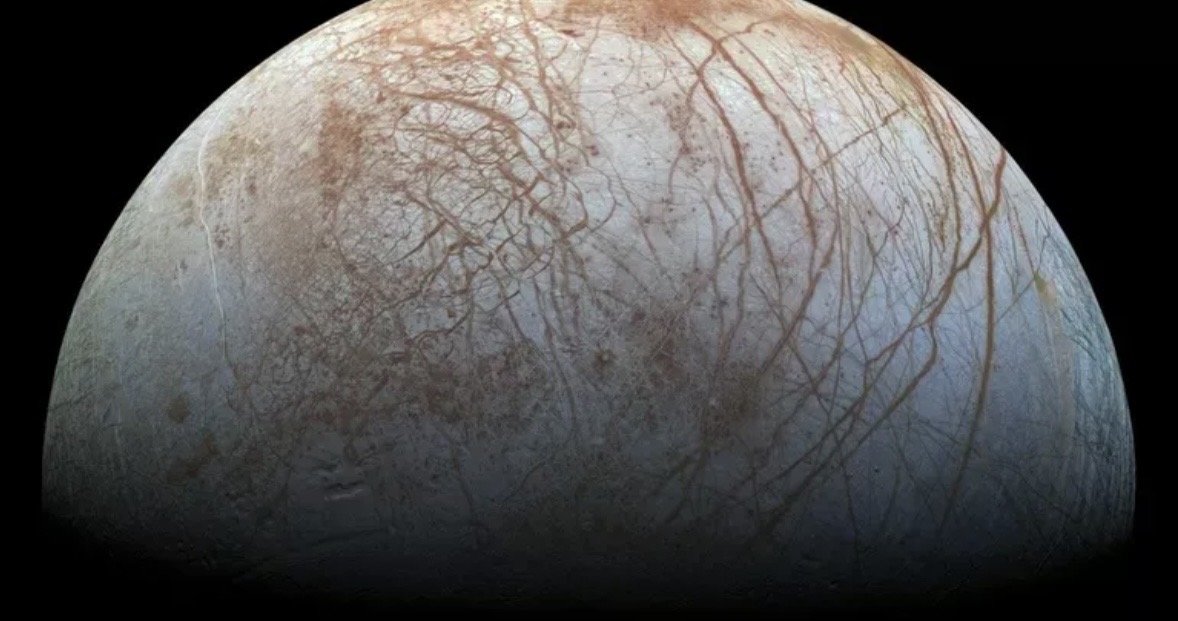
Astronomers identify two moons in the Solar System as potential cradles for life
29 Apr. 12:16Scientific inquiry into extraterrestrial life has identified two prime locations within our Solar System that could support biological processes. Russian astronomer Sergey Nazarov highlights Saturn's moon Enceladus and Jupiter's moon Europa as the most promising candidates for future biological discoveries. These celestial bodies have moved to the forefront of planetary science due to their unique geological structures.
The defining characteristic of both Enceladus and Europa is the presence of vast sub-surface oceans hidden beneath thick protective shells of ice. Water is the fundamental building block of life as we know it, and the existence of liquid water in such high volumes suggests that these moons are far from being dormant frozen rocks. Instead, they represent dynamic environments with active internal heating.
Beyond the presence of water, researchers have detected essential chemical elements and energy sources necessary for abiogenesis—the process by which life arises from non-living matter. Plumes of water vapor erupting from Enceladus, in particular, have revealed traces of complex organic molecules. These chemical signatures reinforce the theory that a "habitable zone" could exist far from the Sun’s direct warmth.
Space agencies worldwide are currently developing sophisticated missions to study these icy moons in greater detail. Future probes aim to penetrate the icy crusts or sample the erupting plumes to search for direct evidence of microbial life. Nazarov’s insights underscore a growing scientific consensus that the search for life is no longer limited to Earth-like planets, but extends to the moons of gas giants.
Also read




On-the-Go Power: Japanese Engineers Develop Wireless In-Road Charging for Electric Vehicles
10 Oct. 08:10In a major leap for electric mobility, Honda R&D, alongside Taisei Corporation and Taisei Rotec, has unveiled an innovative dynamic wireless charging system that charges electric vehicles as they drive. By embedding compact energy-transmitting modules directly into the road surface, the system transfers power via a magnetic field to receivers mounted underneath moving vehicles. Designed to withstand heavy commercial transport up to 20 tons, real-world road testing is scheduled to begin in Japan in April 2027.
The technology eliminates the need for full road reconstruction, as modules can be integrated directly into milled asphalt layers. Aimed at boosting charging power up to 150 kW in future iterations, this infrastructure solution promise to significantly reduce grid pressure on traditional charging stations, particularly for logistics and commercial fleets.
Blitz