
Playlist
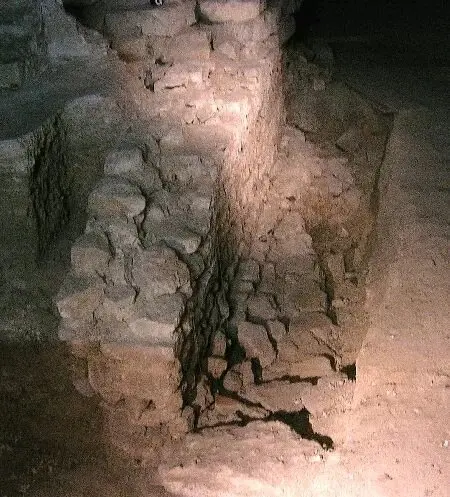
French archaeologists have made a historic discovery on Île de la Cité near the Notre-Dame Cathedral, unearthing a 20-meter section of an ancient stone-and-timber wall four meters beneath the Hôtel-Dieu hospital. According to Le Monde, researchers confirmed that this location marks the historic center where Paris was originally founded. The find provides the first physical evidence of pre-Roman Lutetia, the settlement established by the Parisii tribe from which the modern capital derives its name.
Previously, Lutetia's exact location was known only through written records such as Julius Caesar's Commentaries on the Gallic War, sparking long-standing debate among historians. Excavations also revealed spearheads, coins, charred seeds, and traces of fire. Radiocarbon dating of the scorched timber dates the structure between 200 BC and 10 BC, directly aligning with the Battle of Lutetia in 52 BC, during which Gallic forces burned their fortified settlement to prevent it from falling into Roman hands. French Culture Minister Catherine Pégard and Paris Mayor Emmanuel Grégoire hailed the discovery as a monumental milestone in the city's historical record.
Also read




A rye-wheat loaf preserved in a freezer for 36 years has been put on public display as part of the permanent exhibition at the Deutschlandmuseum in Berlin. Dubbed "The Last Loaf of the GDR," it was originally purchased on June 26, 1990, by student Michael Hagedorn, who bought an extra loaf fearing potential food shortages amidst the economic unification of East and West Germany.
The museum's director, Robert Rückel, described the unusual artifact as a unique poignant symbol of everyday human decisions during times of monumental geopolitical change. To maintain its preserved state, the museum installed a custom refrigeration unit where the historical loaf remains permanently frozen for visitors to view.
Blitz